Hey trail friends! As someone who's logged thousands of miles on mountain paths, I can tell you that having the right pockets on your backpack is a total game-changer. Picture yourself scrambling up a steep trail when you need your rain jacket – fast. With smart pocket placement, you'll grab it in seconds instead of digging through your pack like you're searching for buried treasure. These aren't just random pouches sewn onto fabric; they're your trail command center. From quick-access snack pockets to secure spots for your GPS, well-designed compartments keep your adventure flowing smooth and steady. Let's dive into why these practical storage solutions are crucial for every hiker who wants to spend less time rummaging and more time crushing miles.
Understanding the Role of External Pockets in Load Distribution
One of the most overlooked features of hiking backpacks is how external pockets play a pivotal role in distributing weight effectively. We've found that strategically placing heavier items like water bottles in side pockets helps create a balanced load that won't strain your back.
When we're on the trail, we love having quick-access pockets on our hips and shoulder straps – they're perfect for grabbing essentials without taking off our pack.
Smart pocket placement isn't just about convenience; it's about freedom on the trail. By spreading weight across your pack instead of cramming everything into the main compartment, you'll move more efficiently and maintain better stability. We've learned that proper load distribution through well-placed pockets can dramatically boost your endurance and make hiking more enjoyable.
Smart Organization Through Strategic Pocket Placement
Three key aspects make strategic pocket placement essential for any serious hiker: accessibility, protection, and organization. We've found that smart placement of pockets transforms your backpack into a highly efficient gear management system.
When we're on the trail, we need quick access to our most-used items without breaking stride. That's why we love having pockets on hip belts for snacks and shoulder straps for navigation tools.
Side pockets keep our water bottles within easy reach, while specialized compartments protect sensitive equipment from rain and moisture. We can also separate wet gear from dry items, ensuring our electronics stay safe.
The beauty of well-placed pockets is how they let's maintain our flow on the trail while keeping essential gear right where we need it.
Quick-Access Benefits During Weather Changes
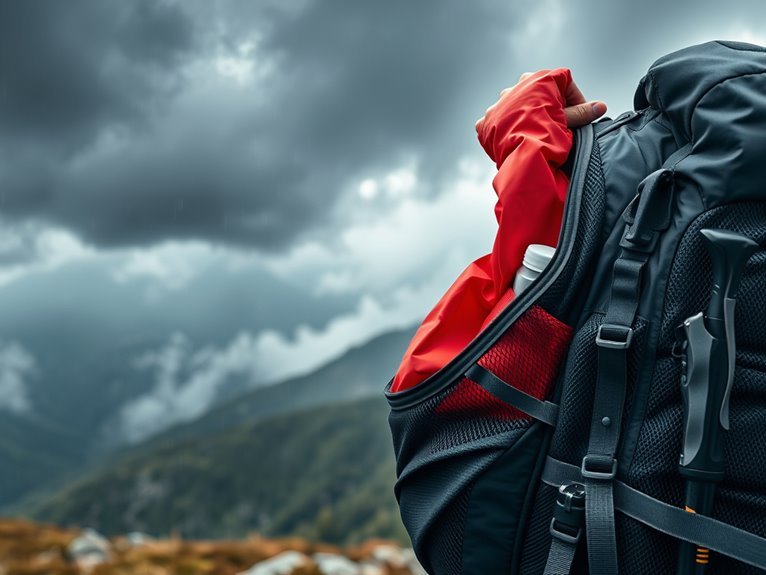
Whether you're caught in a sudden downpour or facing an unexpected temperature drop, quick access to weather gear can make or break your hiking experience. That's why we've designed our hiking backpacks with strategic pocket placement for maximum efficiency.
Smart gear placement isn't just convenient – it's essential for adapting quickly to nature's unpredictable challenges on the trail.
With easy access side pockets and hip pockets, we can grab water bottles and snacks without removing our packs, keeping us moving on the trail.
Front pockets let's quickly reach for sunscreen or bug spray, while lid compartments keep navigation tools and first aid supplies right at our fingertips. When storm clouds roll in, we don't want to dig through our entire pack for rain gear. Instead, we can swiftly pull out weather protection and stay dry.
This smart organization helps us stay prepared for whatever Mother Nature throws our way.
Balancing Weight With Multiple Storage Points
While carrying heavier loads on the trail can be challenging, strategic pocket placement helps us distribute weight more effectively across our hiking backpacks. We've found that adding weight to hip belt pockets and shoulder straps can offset the main weight of the pack, especially when carrying loads over 20 pounds. The key is balancing our gear across multiple storage points.
Store heavier items like water bottles in front pockets to counterbalance the main compartment. Use hip belt pockets for quick-access items, improving weight distribution around your core. Consider Aarn-style front pockets for ideal load balancing on longer treks. Keep electronics and smaller heavy items in shoulder strap pockets for better weight spread.
Specialized Pockets for Essential Hiking Equipment
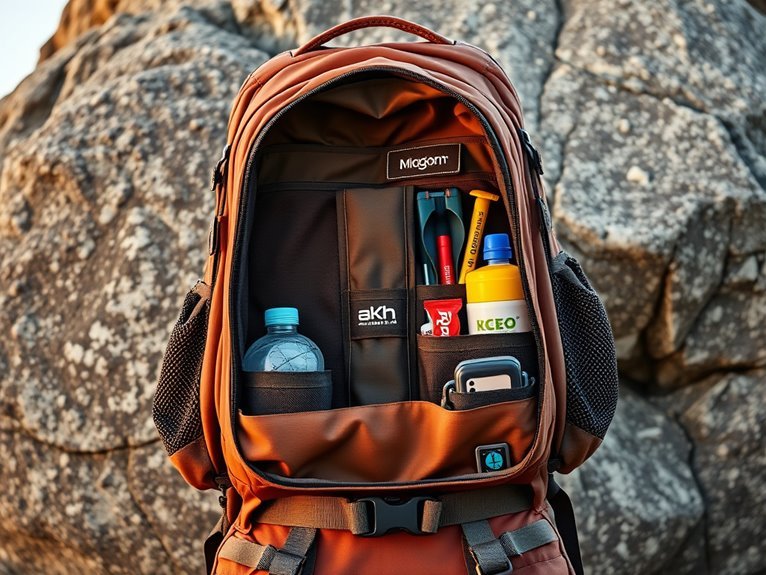
Modern hiking backpacks incorporate specialized pockets that make essential gear easily accessible during our outdoor adventures. Instead of carrying just one or two large compartments, today's packs feature smart storage solutions like hip pocket pouches for snacks and compact navigation tools.
We'll find dedicated spaces for hydration systems and rain covers, ensuring we're prepared when weather shifts unexpectedly. Even a small pack can efficiently organize our essentials with side pockets and shoulder strap attachments, letting us grab items without removing our backpack.
External loops and hooks give us the freedom to secure bulky gear like trekking poles outside the main compartment. With these thoughtfully designed storage options, we're spending less time digging through our packs and more time enjoying the trail.
Safety Advantages of Accessible Emergency Gear
Smart storage designs do more than just organize our gear – they can help safeguard lives on the trail. When emergencies strike, we need quick access to critical safety equipment without removing our packs. That's why strategic pocket placement is essential for wilderness preparedness.
First aid kit and emergency whistles stay ready in side pockets for immediate response to injuries or calls for help. Water purification tablets and fire starters remain accessible in hip belt pouches when we need to treat water or signal rescuers. Front pockets keep our compass and headlamp within easy reach for confident navigation, even after dark. Dedicated compartments for bear spray and personal locator beacons confirm we're prepared for wildlife encounters and remote area emergencies.
These thoughtful storage solutions give us the confidence to venture further while staying safe.
Maximizing Pocket Features for Different Terrain Types
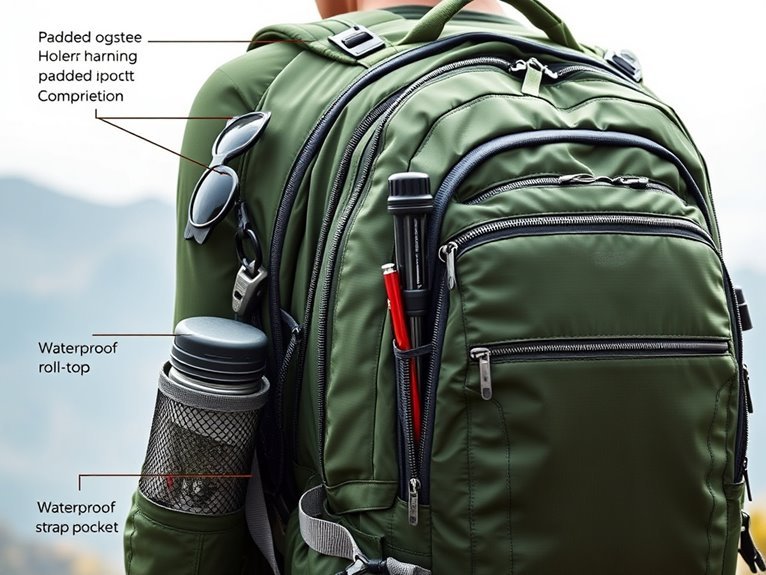
Different hiking terrains call for specialized pocket configurations to handle their unique challenges. In arid regions, we'll want quick-access pockets for our water bottle and sun gear, while rugged mountain trails demand secure attachment points for trekking poles and ice axes.
When we're hiking above treeline, external pockets become our best friends for stashing layers as weather changes rapidly. However, we'll need to think differently in brushy areas, where fewer exterior pockets help prevent snagging on branches.
For wet environments, we prioritize waterproof compartments that keep our essential gear dry.
The key is matching pocket features to our environment – ensuring immediate access to what we need most while protecting our gear from terrain-specific challenges. This smart organization can make a huge difference in our hiking experience.
Frequently Asked Questions
What Are Backpack Side Pockets For?
We use backpack side pockets for quick access items, frequently used gear, and easily accessible snacks while we're on the move. They're perfect for keeping water bottles and essentials within instant reach.
What Are the Features of a Good Hiking Backpack?
Like a well-oiled machine, we'll find hiking backpacks work best when they've got comfortable load distribution through adjustable back support, breathable mesh material, and plenty of attachment points for our gear.
What Are the Extra Straps on a Backpack For?
We use backpack straps for adjusting load weight and distributing it evenly across our shoulders and hips. These straps also help in stabilizing backpack contents during challenging trails and movements.
What Is the Pocket on a Backpack Strap For?
We use backpack strap pockets for quick access to essential items like phones while we're on the move. They're also great for storing strap adjustments and keeping frequently needed gear within arm's reach.
Conclusion
Those extra pockets on hiking backpacks serve real practical purposes – from keeping your trail snacks within reach to stashing emergency gear where you need it. A well-organized pack with strategic compartments helps distribute weight properly and lets you access important items without unpacking everything. Whether you're planning a day hike or hitting the backcountry for a week, take time to understand your pack's pocket system and how to use it effectively. Get out there and make those pockets work for your next adventure.