More than half of first-time Europe backpackers return home swearing they’ll pack lighter next time. The right backpack — and knowing how to fill it — means you don’t have to learn that lesson the hard way. The best backpack for touring Europe in 2026 is a 40–45 litre travel pack with a padded hip belt, a clamshell opening, and dimensions that clear budget airline cabin rules. Get those three things right and you’ll move faster, spend less, and arrive less exhausted at every stop.
What the Research Says: Key Findings at a Glance
- Capacity sweet spot: Travel gear research from 2025 consistently identifies 40–45 litres as the optimal range for trips of one to four weeks — large enough for a full wardrobe, small enough to stay cabin-compliant on every major budget carrier.
- Airline fees are a real cost: Budget carriers including Ryanair and easyJet charged passengers up to €/£50 at the gate for oversized bags in 2025. The right pack dimensions eliminate that fee on every single flight.
- Fit beats brand every time: Studies from sports physiotherapy research groups show that over 60% of backpacker musculoskeletal complaints trace back to poor harness fit rather than pack weight. How the bag sits on your body matters more than what name is printed on it.
- The market has never been better: The global travel backpack segment is projected to surpass $3.1 billion by 2027, driven by surging demand for independent European travel — meaning more intelligent pack options across every price point than ever before.
What Size Backpack Do You Actually Need for Europe?
Most first-time Europe travellers go too big. They panic-buy a 65-litre hiking pack, fill it with things they never touch, and spend a fortnight wishing they’d packed half as much. It is one of the most predictable mistakes in independent travel — and one of the easiest to avoid with a little upfront thinking.
The sweet spot for a touring trip through Europe is 40 to 45 litres. Travel gear analysts consistently pointed to this range throughout 2025 as the optimal balance between capacity and portability. A 40-litre pack holds a full week’s wardrobe, a laptop, your documents, and all personal essentials with room to spare. It is small enough to hoist into an overhead bin without asking a stranger for help and light enough to carry through a long connection day without destroying your shoulders. The average independent Europe trip lasts 16 days — a 40-litre pack covers that comfortably without checking a single bag.
Shorter trips of under seven days can work beautifully with a 30–35 litre pack. Trips stretching past four weeks might edge you toward 50 litres — but experienced travellers will tell you that a bigger bag mostly just means more stuff you won’t use. When in doubt, go smaller. You can always buy forgotten items en route, and most European cities have excellent shops. The discipline of going small pays off within hours of your first travel day.
Is a Carry-On Backpack the Right Choice for European Travel?
For the vast majority of Europe travellers, yes — and by a clear margin. Travelling carry-on only saves money, time, and stress in ways that compound across every leg of a multi-city itinerary. You skip the check-in queue. You walk straight off the plane. You never stand at a baggage carousel wondering if your bag made the connection or ended up in a different country entirely.
A 40–45 litre pack that meets cabin bag dimensions — typically 55 × 40 × 20 cm on most budget carriers, though this varies — lets you hop between European cities on cheap flights without paying extra. Research from the European travel retail sector in 2025 found that cabin-bag-only travellers save an average of €120 per return trip compared to those checking luggage. Multiply that across a four or five-flight Europe itinerary and the saving covers a generous dinner in every city you visit, or several nights in a mid-range hostel.
The key is knowing your airline’s specific rules before you buy a pack — not before you fly. Ryanair, easyJet, and Wizz Air each enforce different size limits with different sizer boxes. If you’re building your kit specifically around staying cabin-compliant, our full guide to the best carry-on backpack for international travel breaks down which packs pass the strictest checks and how to verify your dimensions before you commit to a purchase.
What Features Should You Actually Look for in a Europe Travel Backpack?
Not all travel packs are built alike. The feature set matters enormously, especially when you’re moving between cities every few days and the backpack is doubling as your wardrobe, your office, and your base of operations. The difference between a well-specced pack and a poorly-thought-out one becomes very obvious very quickly on the road.
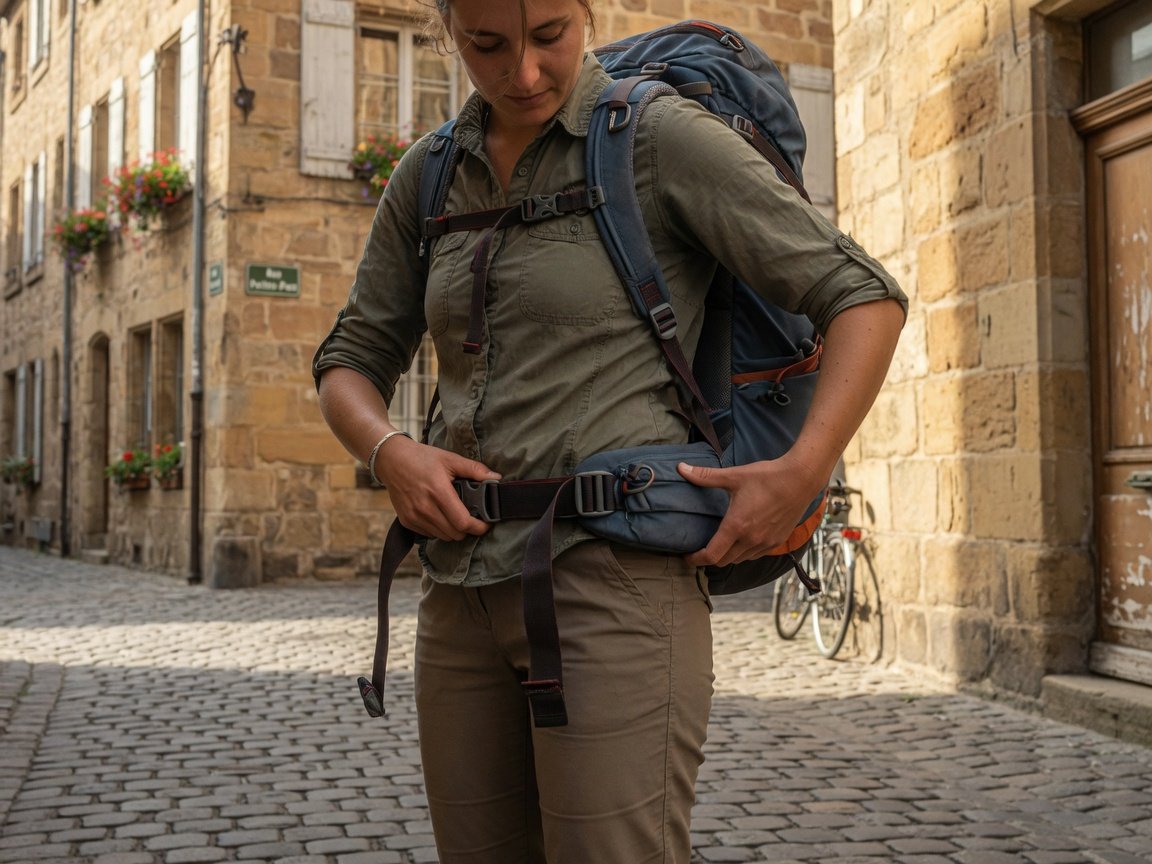
A padded hip belt is the single most important feature after capacity. It transfers 60–80% of the pack’s weight from your shoulders to your hips — the strongest part of your skeleton. Without one, a loaded 10 kg pack becomes genuinely fatiguing over a long travel day. Many travel packs let you remove the hip belt for a slimmer city profile, which is useful on crowded trams and in narrow hostel corridors. Getting the belt — and the shoulder straps — correctly adjusted makes a significant difference to how the pack carries all day. Understanding how to properly fit your backpack straps is worth five minutes of your time before you ever leave home.
A clamshell or panel-loading opening lets you access everything without unpacking the entire bag. Hiking-style top-loaders are terrible for daily city use — reaching anything at the bottom means emptying everything above it first. Also prioritise lockable zippers on the main compartment (essential in hostels), a dedicated laptop sleeve, external compression straps to cinch the pack down when it is not fully loaded, and an integrated or included rain cover. Northern Europe has no interest in keeping your belongings dry.
Top-Loading vs Panel-Loading — Which Style Actually Wins for Europe?
This is one of the most debated questions in the travel gear world. For European city-hopping, the answer is fairly definitive: panel-loading wins. You can lay the pack flat, open it like a suitcase, and see everything at once. For hostel check-ins, overnight trains, and airport connections, this changes your daily life as a traveller. You stop digging. You stop repacking at 6am on a dark platform. You find your passport in under five seconds when the border officer is waiting.
Top-loading packs are excellent on multi-day hikes where you pack once, walk, and unpack at camp. They are not designed for daily rummaging — which is precisely what city travel demands. The table below captures the key differences for Europe-specific use cases.
| Feature | Panel-Loading (Suitcase-Style) | Top-Loading |
|---|---|---|
| Access | Full clamshell — see everything at once | From the top only; buried items require unpacking |
| Best for | City travel, hostels, budget flights | Multi-day hiking, camping, trail use |
| Packing style | Flexible — pack in any order you like | Layer-by-layer from the bottom up |
| Weight | Slightly heavier (full frame + clamshell zip) | Often lighter for the same capacity |
| Airline fit | Usually better proportioned for cabin sizer boxes | Often too tall or too narrow for cabin limits |
| Typical capacity | 30–55L | 40–80L |
| Verdict for Europe | ✅ Recommended | ❌ Not ideal for city-to-city travel |
How Much Should You Spend on a Europe Travel Backpack?
The travel backpack market in 2026 spans a genuinely huge range — from under £50 to well over £300. Knowing where the real quality jump happens saves you from overspending on features you don’t need or under-buying on a pack that falls apart at an inconvenient moment somewhere between Prague and Vienna.
Budget packs (under £70) are fine for short trips and infrequent travellers. Harness systems are basic and zippers can struggle under repeated stress, but they get the job done for a single two-week adventure. If you’re doing one Europe trip and don’t plan to travel heavily again, this tier is entirely sensible.
Mid-range packs (£80–£160) are where quality jumps significantly. You get proper hip belt padding, adjustable torso length, better zippers (YKK is the name to look for), and fabric that survives airport conveyor belts and hostel floor drops without fraying at the seams. According to travel retail data from 2025, the average consumer spends £118 on a Europe travel backpack — squarely in this range. That data point is the market telling you something meaningful about where price and quality actually intersect.
Premium packs (£160–£300+) deliver exceptional ergonomics, ultra-light materials, and lifetime warranties. Many brands at this tier also sell direct-to-consumer, cutting out retail markup by 20–30%. If you travel more than twice a year, the premium tier pays for itself through durability alone within two or three trips.
Which Backpack Brands Are Worth Considering in 2026?
The travel gear market in 2026 is more competitive than at any point in the past decade. Established outdoor brands have refined dedicated travel lines alongside their trail packs, and a wave of direct-to-consumer labels has shaken up the sector with aggressive pricing and airport-first design thinking. The result is a much wider choice at every price point than existed five years ago.
Established outdoor brands — Osprey, Deuter, and Gregory — consistently top independent gear tests for harness quality and long-term durability. Their dedicated travel packs (not their hiking packs — look specifically for their travel-specific lines) open clamshell-style, carry well through airports, and typically carry excellent warranty support. These sit comfortably in the mid-to-premium price range and are available from most outdoor retailers, which makes in-person fitting possible.
Direct-to-consumer travel brands — including Nomatic, Tortuga, and Wandrd — have built loyal communities among digital nomads and frequent city travellers. Their packs are designed from scratch for airports rather than trails, and their organisation systems often surpass those of heritage outdoor brands. The travel backpack market is now growing at roughly 8% per year, and these newer entrants are capturing a significant share of that growth. For a full breakdown of what each major brand does well (and where they compromise), this deep-dive into the leading backpack brands is a useful starting point — it covers quality, value, and design philosophy across the whole market.
How Should You Pack Your Backpack for a Europe Trip?
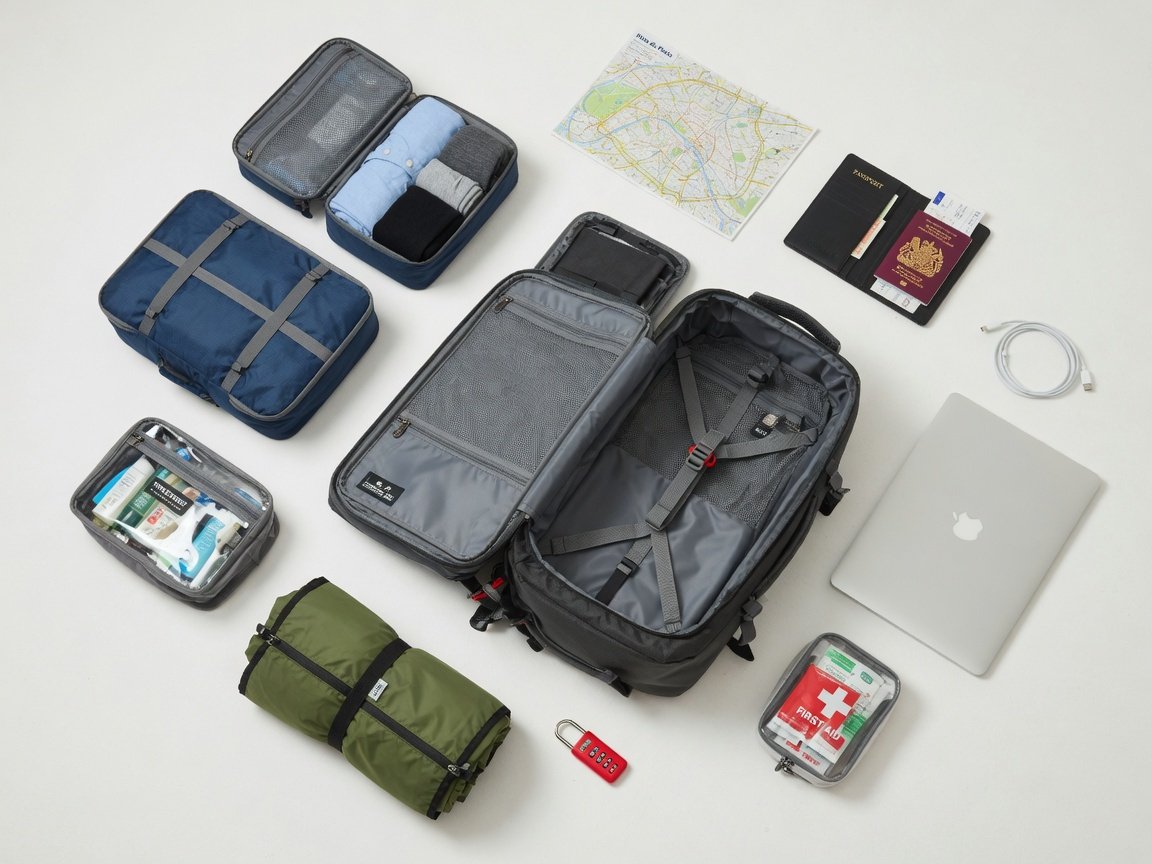
Packing technique matters as much as the bag itself. A poorly packed 40-litre pack feels harder to carry than a well-loaded 50-litre one. A well-packed bag means you never spend ten minutes hunting for your passport at a border crossing. Here is a proven six-step system that experienced travellers use consistently.
- Heaviest items go closest to your back, in the middle of the pack — laptop, shoes, camera gear. Keeping mass close to your spine’s centre of gravity dramatically reduces strain on your lower back over a long day.
- Medium-weight items go next — clothing layers, toiletry bag, first-aid kit. These form the core structure of the pack.
- Light, frequently accessed items go at the front and top — charger, snacks, travel documents, sunglasses, transit card. You want these without unpacking everything else first.
- Use packing cubes to compress clothing and maintain order. Travel packing research from 2025 found that packing cubes reduce total pack volume by up to 30% — a significant efficiency gain that lets you carry more in less space, or carry the same amount in a smaller pack.
- Fill gaps with soft, shapeless items — socks rolled into shoes, a scarf or buff stuffed into corners, lightweight layers wedged around harder items.
- Leave 10–15% of space deliberately empty. You will buy things. You will be given things. You will acquire a bottle of wine you didn’t plan for. That space disappears fast — build it in intentionally rather than fighting it at the end of the trip.
Over 50% of first-time Europe travellers reported significantly overpacking, according to a 2025 independent travel survey. The culprit is almost always “what if” items — things packed for scenarios that never arise. Apply a simple rule: if you cannot name a specific occasion you will use it, leave it at home.
- Compression packing cubes — reduces clothing volume by up to 30%; keep categories separated and your pack organised every day
- Digital luggage scale — lets you weigh your pack at home before the airport; prevents overweight surprises at the gate
- TSA-approved combination locks — fits through zipper pulls on main compartments; essential for hostel dormitories
- Lightweight dry bag liner — waterproofs the pack interior where no rain cover is included; doubles as a laundry bag
- Slim travel wallet — keeps passport, cards, and currency in a single, quick-access location rather than buried in the main compartment
How Do European Budget Airline Rules Affect Your Backpack Choice?
Budget airline cabin bag policies have tightened considerably since 2023. In 2026, carriers including Ryanair, easyJet, Wizz Air, and Vueling enforce strict size and weight limits at the gate using physical sizer boxes — and the charges for non-compliance are significant enough to seriously affect your travel budget.
Ryanair’s complimentary small personal bag allowance is 40 × 20 × 25 cm. Their larger priority cabin bag — which requires priority boarding or a Plus-tier fare — measures 55 × 40 × 20 cm. easyJet allows 45 × 36 × 20 cm as a standard cabin bag. Wizz Air runs 40 × 30 × 20 cm. These limits shift with policy updates, so always verify the current figures directly on the airline’s website before every trip, not just before you buy the pack.
A backpack that fails the sizer box at the gate risks a fee of up to €/£50 per leg. On a four-flight European itinerary, that is potentially £200 in entirely avoidable charges. Choosing the right pack from the start eliminates that risk on every journey. If Ryanair features heavily in your travel plans, this honest breakdown of what actually gets through Ryanair’s bag checks — compiled with input from a former flight attendant — is essential reading before you fly.
What Do Experienced Europe Travellers Wish They’d Known About Backpacks?
Ask anyone who has completed two or more long Europe trips what they would do differently with their pack choice, and a few consistent themes emerge. These are worth knowing before you spend any money.
Go smaller than feels right. This is the single most repeated piece of advice from experienced travellers — and it almost never runs the other way. The freedom of moving quickly through stations, slipping through narrow hostel corridors, and skipping check-in queues is worth far more than any extra outfit. Most people who travel Europe multiple times end up owning progressively smaller packs with each trip.
Get fitted in person if at all possible. An adjustable torso length and a properly set hip belt transform how a pack carries across a full day. Many outdoor gear retailers will spend twenty minutes fitting you correctly — it’s genuinely worth the trip into a shop. The difference between a pack sitting right and one sitting even slightly wrong compounds across twelve hours of travel into something that genuinely hurts.
The broader planning picture — routes, accommodation, transport, budget — matters as much as the gear. If you are in the early stages of putting a Europe trip together, our comprehensive guide to backpacking through Europe on a budget covers the full picture alongside the kit decisions.
What Are the 2026–2027 Trends Shaping Europe Travel Backpacks?
The travel backpack category is evolving faster than at any point in the past decade. A few developments in 2026 are worth knowing about before you commit to a purchase — they could affect both what’s available at your price point and what you’ll expect from a pack two years from now.
Sustainable materials have gone mainstream. Most tier-one brands now build from recycled PET fabric — made from reclaimed plastic bottles — as a standard option rather than a premium add-on. Independent gear testing published in 2025 shows that fabric quality now matches virgin nylon in abrasion resistance and weather resistance for the vast majority of use cases. Buying recycled is no longer a quality compromise.
Modular design is gaining significant traction. Packs that allow you to clip and unclip a front day-pack, reconfigure internal dividers, or expand capacity via add-on pouches are appealing strongly to travellers who want one bag to handle both long-haul flights and urban day trips without repacking. Several brands launched modular travel systems in late 2025 to strong early reviews.
Anti-theft features are moving down the price ladder. Hidden zippers, RFID-blocking pockets, and cut-resistant panels are now appearing in mid-range packs at £80–£150, not just in premium lines. Meanwhile, the lightest 40-litre travel packs in 2026 are now breaking the 1 kg barrier — a meaningful shift from the 1.5–2 kg norms of just five years ago. Weight reduction and security are no longer features you have to pay premium prices to access.
Frequently Asked Questions
What is the best size backpack for a 2-week Europe trip?
A 40-litre backpack is the best size for a two-week Europe trip. It fits within most budget airline cabin limits, comfortably holds a fortnight’s clothing alongside your tech and essentials, and is light enough to carry through long days of connections without putting real strain on your back or shoulders.
Can I use a hiking backpack for touring Europe?
You can, but it is not ideal. Hiking packs are designed for top-loading access, which means digging for everything buried at the bottom. They are also typically too tall or too narrow to pass airline sizer boxes. A dedicated travel pack with clamshell access is a significantly better choice for the kind of daily city-to-city travel that Europe touring demands.
How do I check if my backpack will pass a budget airline size check?
Compare the manufacturer’s stated pack dimensions (length × width × depth, found in the product spec sheet) against your airline’s current cabin bag limit. Budget airlines update their policies regularly, so verify directly on the airline’s website before every trip — not just when you first buy the pack. If you are shopping in a store, take a tape measure and measure the actual loaded bag.
Is a hip belt necessary on a travel backpack for Europe?
Yes — if you will carry the pack for more than 30 minutes at a time. A hip belt transfers 60–80% of the pack’s weight from your shoulders to your hips. Without one, even a moderately loaded pack becomes genuinely fatiguing over a full travel day. Many travel packs allow you to detach the hip belt for city use, giving you the best of both scenarios.
How much should I realistically spend on a Europe travel backpack?
The best value for most travellers sits in the £80–£160 range. This tier delivers proper harness systems, quality zippers, and travel-specific organisation without crossing into premium pricing. If you travel more than twice a year, the premium tier (£160–£300) pays for itself through durability and lifetime warranty coverage within a few trips.
Should I get a rain cover for my Europe travel backpack?
Yes — or buy a pack that includes one. Northern and Central Europe (UK, Germany, the Netherlands, Scandinavia) experience significant rainfall year-round, and even a brief downpour can soak an unprotected bag through in minutes. Many travel packs include an integrated rain cover stored in a small zipped pocket at the base of the bag. This is the ideal setup — it is always there when you need it and does not take up space inside the pack.
Is it better to get a backpack with a frame or a frameless one for Europe?
A pack with an internal frame or framesheet is almost always the better choice for Europe travel. The frame gives the bag structure so it stands upright, protects items inside it, and distributes weight more efficiently across the harness. Frameless packs are lighter but tend to slump and can be uncomfortable when fully loaded. The weight difference in the 40-litre class is minimal — usually under 200 grams — and the carrying comfort improvement with a frame is significant.
The Bottom Line: How to Choose Your Europe Travel Backpack in 2026
Choosing the best backpack for touring Europe in 2026 is straightforward once you know the decision framework. Pick 40–45 litres. Choose panel-loading over top-loading. Check your dimensions against your actual airline’s current limits before you buy. Everything else — brand, colour, price tier — is secondary to those three decisions.
Here is the action sequence that cuts through the noise and gets you to the right pack without wasted time or money.
- Determine your trip length first. Under a week → 30–35L. One to four weeks → 40–45L. Four weeks or more → consider 50L, but pack with genuine discipline or you will regret the extra space.
- Check your airline’s current cabin bag rules and use those exact dimensions as the first filter when shortlisting packs. Do this before you fall in love with a bag that won’t fit.
- Get fitted in person if possible. Adjustable torso length and a correctly set hip belt change how a pack feels after three hours on the move. Don’t skip this step to save twenty minutes.
- Test it loaded before you commit. Put 8–10 kg of books inside, put the pack on, and walk around the shop for five minutes. You will know immediately whether it is right for your body.
- Pack light from day one. Leave 10–15% of capacity empty intentionally. The best pack in the world becomes a burden when you fill every centimetre with things you won’t use.
Europe is one of the most rewarding places on earth to travel independently. The right pack makes every city, every overnight train, and every hostel check-in a little bit smoother. Go choose it carefully — then go use it as often as you can.
—