Yes, you can fit everything you need for a full week into a single carry-on backpack. The key is a 30–45 litre pack, a disciplined clothing list, and a few space-saving techniques that make every cubic inch count — and you won’t pay a penny in luggage fees while you’re at it.
At a Glance
- Right size matters: A 30–45 litre backpack is the carry-on-compliant sweet spot for a week of travel gear.
- Clothing strategy wins: Mix-and-match pieces in neutral colours create more outfits from fewer items.
- Roll, don’t fold: The army-roll technique compresses clothing and reduces wrinkles without extra packing aids.
- Leave what you can buy: Most toiletries are available at your destination — carry only what genuinely can’t be replaced.
Why Does Packing Light Change How You Travel?
The difference between a 10 kg checked bag and a compact carry-on backpack shows up long before you reach your destination. No queuing at the check-in desk. No wait at the baggage carousel. No risk of the airline losing your bag. And no surprise fee for luggage that tips over the weight limit.
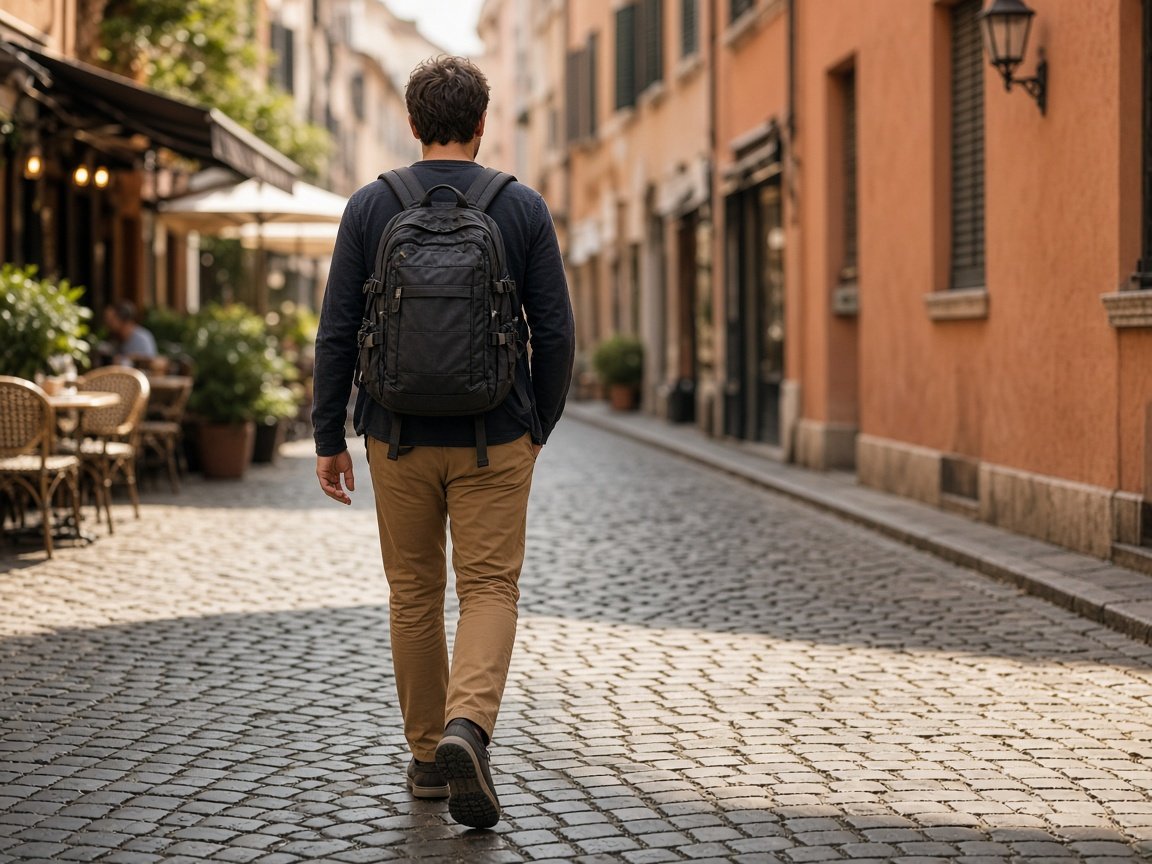
There’s a subtler benefit too. A lighter pack makes the entire trip more spontaneous. You can board a bus at a moment’s notice, store your bag under a café table, and explore cobbled streets without wheels jamming in the gaps. The logistical overhead of managing luggage simply disappears. Most people who try carry-on-only travel report that the hardest part wasn’t the first few hours without a checked bag — it was convincing themselves to try it at all. After one trip, the response is almost always the same: they can’t imagine going back.
What Backpack Size Do You Need for a Week-Long Trip?
The ideal capacity for a one-week trip is between 30 and 45 litres. This range is large enough for a week’s clothing, a foldable daypack, your electronics, and your toiletries — yet small enough to pass as cabin luggage on most airlines.
Bigger is not better here. Human nature fills available space. Travel with a 65-litre hiking pack and you’ll use all 65 litres — most of it items you won’t touch. A smaller bag creates useful discipline. If you’re still choosing a pack, the roundup of best travel backpacks for any journey covers options across different budgets and trip styles, with carry-on dimensions included.
Beyond raw capacity, the design matters as much as the size. A panel-loading or clamshell backpack — one that opens fully like a suitcase — gives you a clear view of everything at once and lets you reach any item without unpacking the whole bag. Traditional top-loading hiking packs are designed for trails, not travel days with multiple destination changes. Look for padded shoulder straps, a hip strap, and multiple external pockets. These features distribute weight correctly and add accessible storage without bulk. Don’t skimp on quality: the difference between a solidly built pack and a cheap one becomes obvious after a full day of carrying.
Include a compact foldable daypack in your kit. It sits flat inside the main bag at home and comes out when you’re exploring a city or heading to the beach — carrying your passport, a water bottle, a spare layer, and your phone without forcing you to drag the full pack everywhere.
How Does Checking the Weather Shape Your Packing List?
Weather is the single biggest variable in deciding what to pack. A five-day forecast for your destination can eliminate entire clothing categories — or add them. If rain is expected, a compact packable rain jacket earns its place. If the forecast shows clear skies above 25°C, the jacket comes out and an extra pair of shorts goes in.
Most weather apps now provide forecasts several weeks ahead — more than enough lead time for trip planning. Check twice: once when drafting your initial list, and again the day before you leave. Weather shifts, and swapping a cardigan for a fleece before the bag is closed is far easier than realising at the airport that you’ve packed the wrong layer.
Pay attention to the temperature range, not just the daily high. A destination that reaches 28°C during the day but drops to 14°C at night needs at least one packable layer. Lightweight synthetics and merino wool handle wide temperature swings, dry quickly after a hotel-sink wash, and resist odour — all important qualities for a seven-day one-bag trip.
Why Should You Plan Your Activities Before Packing a Single Thing?
Your activity plan determines what gear is actually necessary. A week of hiking needs trail shoes, moisture-wicking layers, and durable trousers. A week of city museums and restaurant dinners needs comfortable walking shoes, smart-casual tops, and nothing trail-specific. Pack without this picture and you’ll carry gear for both — which is exactly how bags become too heavy.
Map out the main activities for each day, even roughly. Formal meals? Beach days? A day hike? Once you have a clear list, audit every item against it. If hiking is on the plan, the step-by-step guide on how to pack a backpack for hiking covers load distribution and trail-specific kit in useful detail.
Activities also define what to leave behind. No formal dinner means no dress shoes. Mostly outdoors means no formal shirts. Each item that stays home is weight off your back and volume back in your bag.
What Should You Pack for a Week? The Full Clothing List
Before packing anything, lay every potential item on a flat surface — bed or floor. Having it all visible at once makes it easy to spot duplicates and apply the core filter: if you can’t picture wearing it at least twice during the week, it stays home.
For fabric, choose lightweight synthetics or merino wool over cotton. Cotton wrinkles easily, takes a long time to dry after washing, and packs less compactly than synthetic alternatives. Merino is especially worth considering for base layers and t-shirts — it handles a wide temperature range and stays fresh longer between washes, which matters on a seven-day trip.
Suggested One-Week Clothing List
| Category | Men | Women |
|---|---|---|
| Bottoms | 2 jeans, 1 khakis, 1 shorts | 2 jeans, 2 shorts |
| Tops | 2–3 short-sleeve t-shirts, 1 short-sleeve shirt, 1 long-sleeve shirt | 3–4 short-sleeve tops, 1 long-sleeve top |
| Layer | 1 jacket or cardigan | 1 jacket or cardigan |
| Dresses / Smart | — | 1–2 dresses, or 1 dress + 1 skirt |
| Underwear | Enough for planned activities | Enough for planned activities |
| Socks | At least 3 pairs | At least 3 pairs |
Stick to neutral, versatile colours — black, white, grey, navy. A black t-shirt pairs with jeans, shorts, and smart trousers. A white top goes under a cardigan or alone in the heat. This capsule approach creates more outfit combinations from fewer pieces, so you’re never stuck in an obvious repeat by day five.
One practical move: wear your bulkiest items on the travel day. The jeans and the jacket go on your body for the flight. The heaviest, most voluminous pieces are out of the bag entirely, freeing meaningful space for everything else.
How Do You Handle Footwear Without Overpacking?
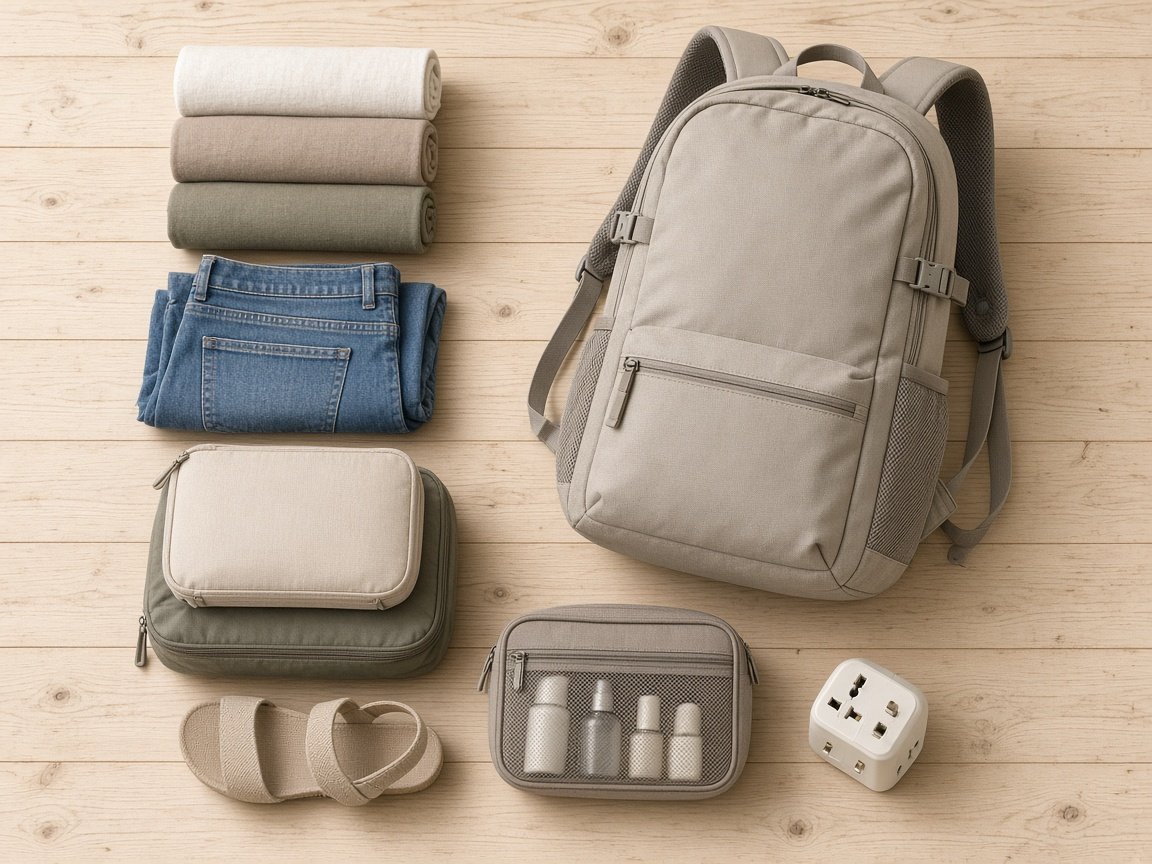
Shoes are the heaviest single category most travellers overpack. For the majority of week-long trips, two pairs cover everything: a lightweight sandal and a comfortable walking shoe or trail runner. The walking shoe handles exploration-heavy days and casual dining. The sandal works for the beach, the pool, or relaxed warm-weather evenings.
If hiking is on the itinerary, swap the walking shoe for trail shoes or sturdy hiking boots — but don’t carry both. As with clothing, wear the heavier pair on travel day: hiking boots on your feet for the flight, not in the bag. Sandals and flats can often tuck around the edges of the main compartment or slot into side pockets.
Resist the “just in case” third pair. It almost always stays unused. For one evening that might require something smarter, a clean dark trainer works in most casual-to-smart settings — and saves significant weight and volume in the bag.
Which Electronics Are Actually Worth Carrying?
Electronics are where good intentions often unravel. A DSLR camera, a laptop, a tablet, a portable speaker — each feels justifiable individually. Together they represent a significant share of your pack’s weight and volume. The useful test for each device: what does this do that my smartphone can’t?
For most travellers on a week-long trip, the honest answer is very little. Modern smartphone cameras produce strong results for travel photography, and the convenience of always having the camera in your pocket often yields better shots than a bulky DSLR left at the accommodation. If photography is a core purpose of the trip rather than a side benefit, the equation changes — packing a camera safely in your backpack takes specific thought around padding and placement to protect the gear. For most week-long trips, the phone handles it.
The same applies to laptops. Without genuine work obligations, leave it home. Email, video calls, document access, and navigation all run from a phone. A compact tablet is a reasonable compromise if you need a larger screen for a specific task — but challenge yourself on whether you’d actually open it daily before it earns a slot in the bag.
What is worth packing without question: a universal power adapter or converter. Electrical standards differ between regions, and an adapter is small, light, and genuinely essential when your phone battery drops to 3% at the end of a long day out.
What About Toiletries and Medical Supplies?
The working rule for toiletries: if you can buy it at your destination, you don’t need to carry it from home. Toothpaste, shampoo, body wash, and soap are available in pharmacies and convenience stores nearly everywhere. Carrying a full-sized bottle of shampoo from home adds weight and takes up space better used for something else.
If you have strong brand preferences, decant your preferred product into a small travel bottle rather than packing the full-size version. Many brands now produce solid shampoo bars and solid moisturisers — compact, TSA-friendly, and significantly lighter than their liquid equivalents.
Medical supplies are the exception to this rule. Prescription medication travels in your carry-on, never in a checked bag, because it may not be available locally or may require a local prescription. Keep it in a clearly labelled bag for security screening. A small supply of over-the-counter basics — pain relief, plasters, antihistamines — is worth carrying; anything else that’s readily replaceable can be bought at the destination if needed.
How Do You Actually Pack the Backpack? A Step-by-Step Guide
Once you’ve laid out your kit and eliminated what you don’t need, it’s time to load the bag. The order in which items go in affects both how the pack feels on your back and how easy it is to access your gear throughout the trip.
Step 1: Roll Your Clothes
Rolling is more space-efficient than flat folding. The army roll (also called the ranger roll) takes the technique further. For t-shirts: lay flat, fold the bottom hem up by roughly 15 cm, fold both sides in with sleeves tucked, then roll tightly from the collar down. When you reach the folded hem, pull it over the roll to lock it in place. For jeans and trousers: fold in half lengthways and roll firmly from the waist. Secure with a rubber band.
Step 2: Layer the Bag in Order
- Bottom layer: Rolled jeans, trousers, and your folded daypack. These are dense and low — they create a stable base and keep the centre of gravity where it should be.
- Middle layer: Electronics — laptop (if carrying one), tablet, or camera. Place these in the centre of the bag, away from edges. Pad with soft clothing on both sides and against the back panel.
- Upper layer: Rolled t-shirts and lighter clothing items — things you’ll want to reach first on arrival.
- Gaps: Rolled underwear and socks fill corners and spaces between larger items. Toiletries go in an external pocket or near the top of the main compartment for security-screening access.
- Back panel: Pack a t-shirt or two flat against the back panel to cushion between your spine and any hard items inside the bag.
The goal is a bag that feels like one balanced block rather than a shifting collection of loose items. When weight sits close to your back and is distributed evenly, your posture holds better and fatigue arrives much later in a long travel day.
Do Packing Cubes and Compression Bags Really Help?
Packing organisers genuinely earn their keep — but different types solve different problems, and understanding which is which prevents buying tools you don’t need.
Compression bags are the most aggressive on volume. They expel excess air, compressing a bulky fleece or several layers of synthetic clothing into a fraction of their loose size. Use them for heavier items — jackets, jeans, the layers you’re on the fence about including. Compression often settles the debate by making the item small enough to justify its place in the bag.
Packing cubes don’t compress clothing, but they organise it. One cube per category — tops, bottoms, underwear and socks — means finding items quickly and repacking at each destination in under two minutes. They work best when sized to fit your pack’s compartments, leaving no dead space between the cube and the bag wall.
Dry bags solve a different problem entirely. Use them to separate wet items — a damp towel or a sweaty workout top — from clean clothing. This prevents the kind of damp-spreading situation that can compromise an entire layer of clean gear by mid-trip.
Ziploc bags are the budget solution for toiletries. They prevent leaks from reaching the rest of your gear, they’re TSA-transparent, and they can be replaced at any supermarket if they wear out during the trip.
What Are the Final Tips That Make a Real Difference?
- E-reader over guidebook: Physical books add surprising weight for what they deliver. A single e-reader holds your travel guide, novels, and notes with almost no weight penalty.
- Coordinate with travel companions: If you’re travelling with others, divide shared items before packing. One shampoo between two people, one first-aid kit for the group, one tablet instead of two. Each item removed from one bag is a genuine win for everyone.
- Be ruthless with the makeup kit: Identify the five to eight items used daily and leave the rest. Travel-size versions of essentials cut volume significantly without real sacrifice.
- Plan for a mid-week wash: Most accommodations and local laundromats make a mid-trip wash straightforward. One wash mid-week effectively doubles your clothing options without adding a single item to the bag.
- Trust the process once: The fear of not having enough is the hardest part of the first carry-on-only trip. By day three, most travellers report that the items they nearly packed haven’t been missed once.
If you want to try carry-on-only travel on a shorter trip first, the guide to packing a backpack for a 3-day trip covers the condensed version of this approach — a useful dry run before committing to a full week.
Frequently Asked Questions
Can you really fit a week’s worth of clothes into a 35-litre backpack?
Yes — with the right techniques. Rolling clothes using the army-roll method and using compression bags for bulkier items significantly reduces clothing volume. A well-chosen 35-litre pack with multiple pockets is enough for a week’s clothing, one pair of footwear, a foldable daypack, toiletries, and essential electronics. The key is a disciplined clothing list that prioritises mix-and-match pieces over quantity.
What is the maximum backpack size allowed as carry-on luggage?
Carry-on dimensions vary by airline, so check your specific carrier before you travel. As a general guide, most major airlines accept cabin bags up to around 55 × 40 × 20 cm, though some allow up to 56 × 45 × 25 cm. A 30–45 litre backpack typically fits within these limits, but always verify the exact dimensions of any pack you’re considering against your airline’s requirements.
How many pairs of jeans should you pack for a week?
Two pairs is the standard recommendation for a seven-day trip, with one worn on the travel day. Jeans are durable and don’t need washing after every wear, making two pairs enough rotation. For warmer destinations, consider swapping one pair for lightweight chinos or travel trousers — they pack smaller and breathe better in heat.
Should you use packing cubes or just roll your clothes?
Both work, and they complement each other well. Rolling maximises space efficiency — it’s the best pure-volume technique for clothing. Packing cubes add organisation on top of that. If you’re moving between multiple destinations in the week, cubes make repacking fast and stress-free. For a single-destination trip, rolling alone is usually sufficient. Compression bags are the third option — the most aggressive on volume, best used for bulkier items like fleeces and jeans.
Is it better to pack light or bring things just in case?
Pack light, consistently. “Just in case” items almost universally stay unused. A more useful framing: if you need this and don’t have it, can you buy it locally for a reasonable price? If yes, leave it at home. The exception is prescription medication, specialist gear for a specific activity, and anything genuinely hard to replace at your destination.
Do you need a separate daypack as well as your main travel backpack?
A daypack is highly recommended. When exploring a city or on a day trip, you don’t want to carry your full 35-litre pack everywhere. A lightweight foldable daypack sits flat inside your main bag and deploys when needed — carrying documents, a water bottle, a spare layer, and your phone without the full pack on your back. Many travel backpacks now include a removable or packable daypack as part of the system.
Pack Once, Travel Better: Your Next Steps
Packing for a week in a backpack is a skill that improves quickly with practice. The first attempt feels uncertain — there’s always a nagging worry about forgetting something essential. By the end of that first carry-on-only trip, the concern tends to flip: not “did I pack enough?” but “why did I ever carry more?”
Start with the right pack: 30–45 litres, clamshell opening, padded hip straps. Check the weather. Map your activities. Build a capsule wardrobe in neutral colours. Roll everything. Use compression for bulky items. Wear the heaviest shoes and your jacket on travel day. That is the whole system.
When you’re ready to find the right bag for the job, the guide to the best carry-on backpacks for international travel covers purpose-built options with carry-on dimensions, comfort features, and security details that make this kind of travel genuinely straightforward. Apply the system once and you’ll see why carry-on-only travellers are so hard to convert back to checked luggage.