To wash a backpack, empty it completely, pre-treat any stains, then hand wash with mild detergent and lukewarm water — or machine wash on a gentle cold cycle if the care label allows. Rinse until the water runs clear, then air dry upside down with all zippers open. The whole process takes about 30 minutes of active time plus a day of drying.
Your backpack goes everywhere you do. It absorbs sweat on the trail, collects crumbs at your desk, and picks up grime at the bottom of overhead bins. Left uncleaned, that buildup doesn’t just smell — it works into the fabric and shortens the life of your pack. The good news: washing a backpack is straightforward once you know the right approach for your specific pack.
What Are the Key Things to Know Before You Start?
- Hand washing is the safest method for virtually every backpack, especially those with frames, padding, or waterproof coatings.
- Machine washing works for soft-sided packs without metal frames — gentle cycle, cold water only.
- Never use a clothes dryer. Heat warps plastic buckles, degrades DWR coatings, and can crack foam padding.
- Mild soap or baby shampoo is gentler than standard laundry detergent and rinses out more cleanly.
- Most packs benefit from washing every 1–3 months, depending on how frequently and intensively they’re used.
What Supplies Do You Need to Wash a Backpack?
Getting your supplies together before you start makes the process faster and helps you avoid improvising with something that could damage your pack.
- Mild liquid detergent, baby shampoo, or a gear-specific cleaner
- Soft-bristled brush or an old toothbrush
- Clean sponge or microfiber cloth
- Large sink, bathtub, or plastic tub
- Lukewarm water (hot water fades colors and damages coatings)
- Clean dry towels for blotting
- A well-ventilated drying area out of direct sunlight
Avoid bleach, fabric softener, and enzyme-based stain removers. All three attack the DWR (Durable Water Repellent) coating that many hiking and travel packs rely on for weather resistance. If you have a tough stain, diluted dish soap applied directly to the spot works better than any enzyme product for most fabric types.
How Do You Prepare a Backpack for Washing?
Rushing through prep is where most people make avoidable mistakes. A few minutes here sets the rest of the wash up for success.
- Empty every single compartment. Flip the pack upside down over a trash can and shake it out. Check hidden slip pockets, key clips, and the very bottom of the main compartment.
- Remove the frame sheet and any rigid inserts. Most internal frames slide out through a sleeve at the back panel. Wash the frame separately with a damp cloth.
- Detach removable hip belt pads, sternum straps, and modular accessories. Wash these separately so they dry evenly.
- Read the care label. It’s typically stitched inside the main compartment near the top seam. A “do not wash” or tub-with-X symbol means spot cleaning only.
- Pre-treat visible stains. Apply a small amount of diluted dish soap to stained areas and let it sit for 5–10 minutes before the main wash.
- Vacuum or brush out loose debris from interior mesh pockets, hip belt pockets, and the main compartment floor.
Different brands have specific care requirements worth checking before you submerge anything. If you own a SwissGear pack, for example, the construction and coating vary significantly by model — understanding whether your SwissGear backpack is ready for cleaning before you start can save you from a frustrating outcome.
How Do You Hand Wash a Backpack Step by Step?
Hand washing gives you complete control over water temperature, pressure, and which areas get the most attention. It’s the right method for any pack with padding, coatings, or construction you’re not 100% certain about. Block out 20–30 minutes of active washing time.
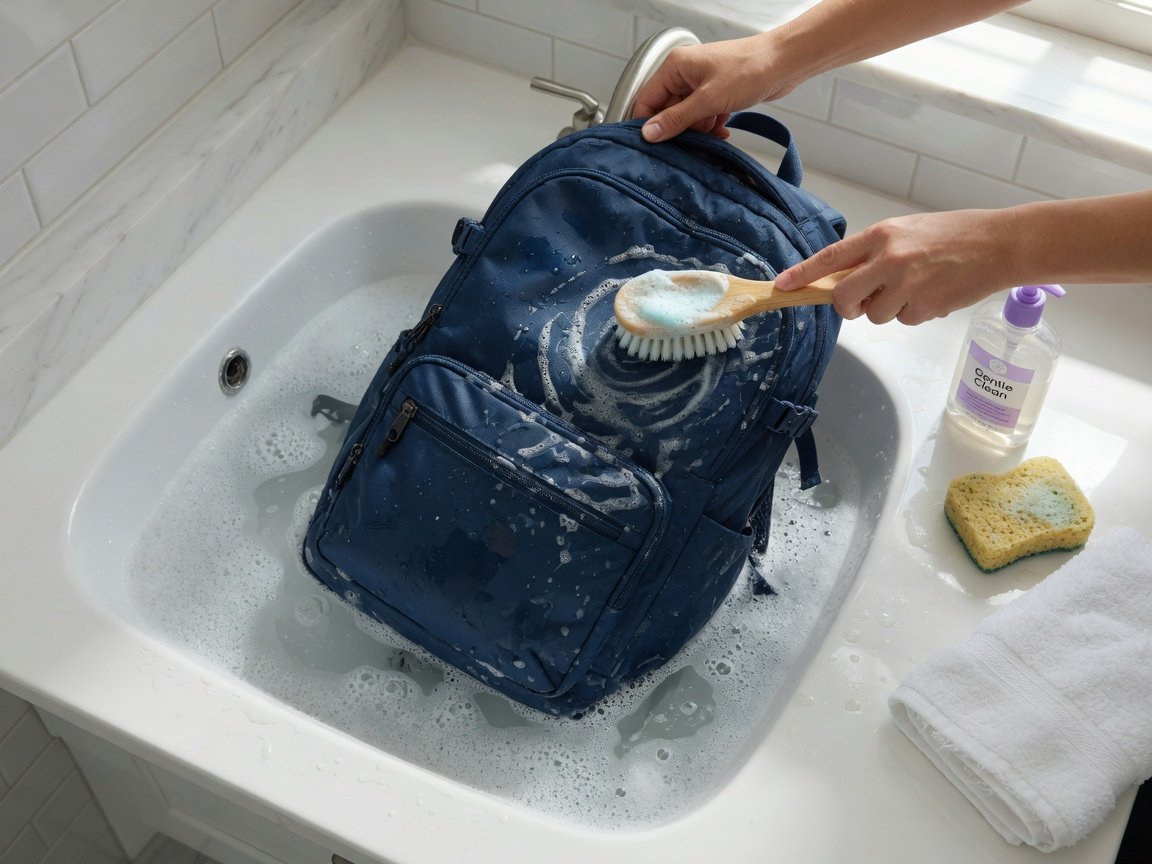
- Fill your sink or tub with lukewarm water. Add 1–2 tablespoons of mild detergent and swirl until dissolved.
- Submerge the backpack fully. Open all zippers so water circulates inside every compartment — closed pockets trap dirty water and soap residue.
- Scrub the exterior with your soft brush. Use circular motions on the main body and work extra time into heavily soiled areas: the bottom panel, shoulder strap attachment points, and the hip belt zone.
- Clean the interior surfaces. Use a damp sponge or cloth to wipe down interior walls, mesh pockets, and the bottom panel where crumbs and debris pack in.
- Work the zipper teeth with your toothbrush. Grime in zipper teeth is a major contributor to early zipper failure — cleaning them now extends their life significantly.
- Drain the soapy water and refill with clean water. Rinse the pack thoroughly, squeezing the fabric gently to push clean water through. Keep rinsing until the water runs completely clear — this usually takes two or three fresh rinses.
- Gently squeeze out excess water. Never wring the pack — that twisting motion stresses seams and distorts padded sections.
- Blot the exterior with a clean towel to pull surface moisture off before moving to drying.
The rinse stage matters more than most people expect. Soap left in the fabric attracts new dirt faster and can leave chalky white residue on dark-colored packs. Take the extra two minutes to rinse a third time — it makes a visible difference.
Can You Machine Wash a Backpack?
Yes — for the right packs. The general rule: if your pack has a rigid internal frame, non-removable metal stays, or thick foam back panels bonded to the shell, keep it out of the machine. Mechanical agitation bends metal stays, stresses frame channel seams, and can crack bonded foam.
Soft-sided packs made from standard nylon or polyester, with no metal components and no fixed back panels, are usually machine-washable. Here’s how to do it without causing damage:
- Remove all frames, stays, removable padding, and detachable accessories.
- Turn the backpack inside out if the construction allows it.
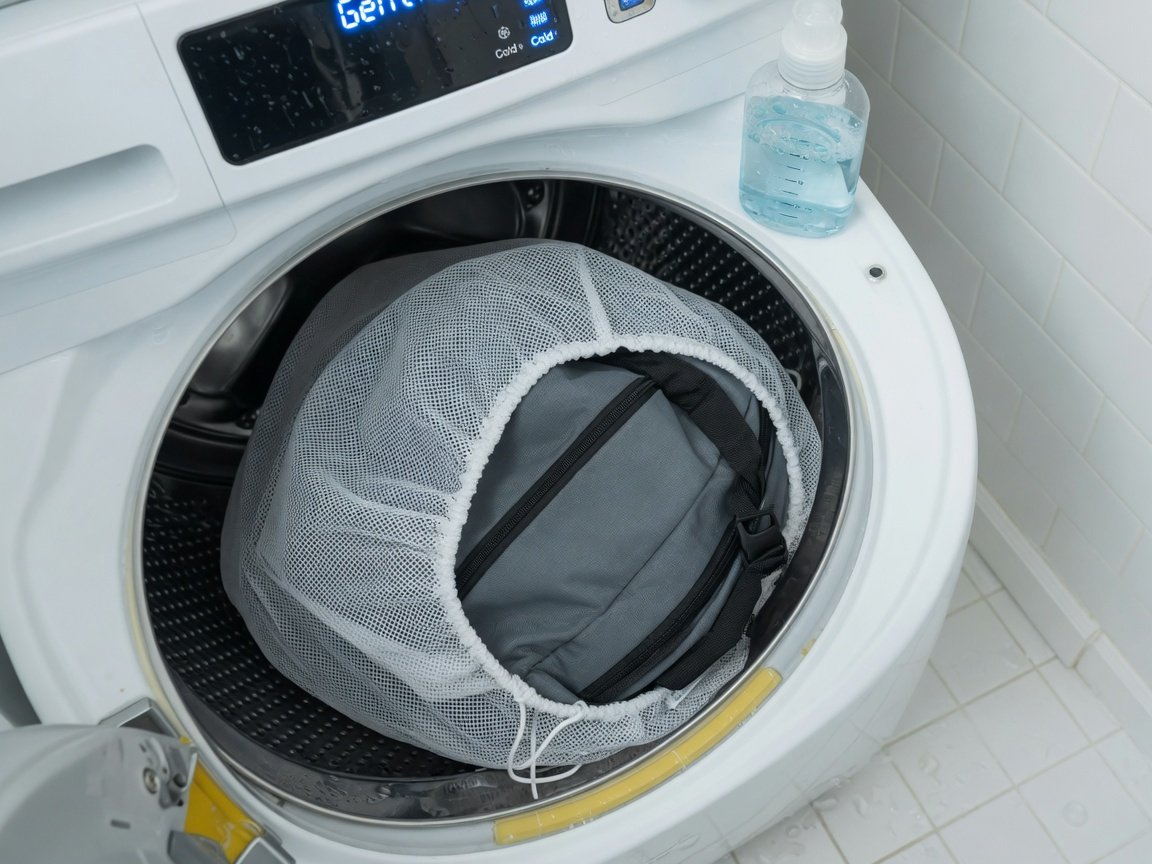
- Place it in a mesh laundry bag or a pillowcase knotted at the top — this protects straps and buckles from wrapping around the drum or catching on the agitator.
- Select the gentle or delicate cycle with cold water only.
- Add a small amount of mild liquid detergent. Avoid powder detergents (they leave residue in fabric), fabric softener, and bleach.
- Use the lowest spin speed your machine offers, or skip the spin cycle entirely.
- Remove the pack immediately when the cycle finishes and move directly to air drying.
If your pack’s care label is worn or missing, hand washing is the safer default. For a much deeper look at which specific pack types handle machine washing well — and which ones don’t — the full guide to machine washing a backpack safely breaks it down by construction and material.
How Do You Spot-Clean a Backpack Without a Full Wash?
When only one section of your pack is dirty — a muddy bottom panel, a coffee stain on the front pocket, a grease smear on a shoulder strap — spot cleaning is faster and puts less stress on the rest of the pack.
- Dampen a clean cloth with lukewarm water.
- Work a small drop of mild soap into a light lather on the cloth.
- Dab the stained area and gently scrub with circular motions.
- Rinse the cloth with clean water and blot the area repeatedly to remove soap.
- Repeat until the stain lifts.
- Let the spot air dry completely before storing the pack.
For oil-based stains — cooking grease, sunscreen, or chain lube — apply a small amount of undiluted dish soap directly to the stain, let it sit for 10 minutes, then scrub and rinse. Dish soap’s degreasing formula lifts oil from nylon and polyester without requiring a full soak.
How Do You Wash Different Backpack Materials?
Material makes a big difference in how you should clean a pack. An approach that’s perfectly safe for standard nylon can permanently damage leather, waxed canvas, or ultralight technical fabrics.
Nylon and Polyester
The most forgiving materials to clean. Hand wash or machine wash (gentle cycle, cold water) with mild detergent and air dry. The vast majority of school bags, daypacks, gym bags, and travel packs fall into this category. Nylon especially responds well to gentle hand scrubbing and comes out looking noticeably fresher after even a basic wash.
Canvas
Hand wash in cold water with mild soap. Canvas can shrink in warm or hot water, and heavy canvas takes significantly longer to dry than nylon. If your canvas pack is waxed for water resistance, avoid full submersion — spot clean only, then re-apply wax after drying to restore the coating.
Leather
Never submerge leather in water. Spot clean with a barely damp cloth and a cleaner made specifically for leather. Follow up with a leather conditioner to keep the material supple and prevent cracking. If your leather pack is looking dull, stiff, or patchy, a thorough leather backpack care treatment can restore it significantly with the right products and process.
Tactical and Heavy-Duty Nylon Packs
Most tactical packs use 500D or 1000D Cordura nylon that handles hand washing well. Avoid machine washing packs with extensive MOLLE webbing, metal hardware, or fixed hydration reservoir sleeves — the agitation can stress webbing attachment points and warp metal components. Focus scrubbing effort on the MOLLE grid, shoulder strap attachment points, and the bottom panel where abrasion and dirt concentrate.
Ultralight and Technical Laminates
Dyneema Composite Fabric, Cuben fiber, and similar ultralight laminates: hand wash only with cold water and a very small amount of mild soap. These materials can delaminate under heat and mechanical agitation. Pat dry with a towel — never wring, twist, or compress — and air dry flat.
How Do You Dry a Backpack After Washing It?
Drying is where most pack damage actually happens. A perfect wash undone by a single dryer cycle is a common and avoidable mistake.
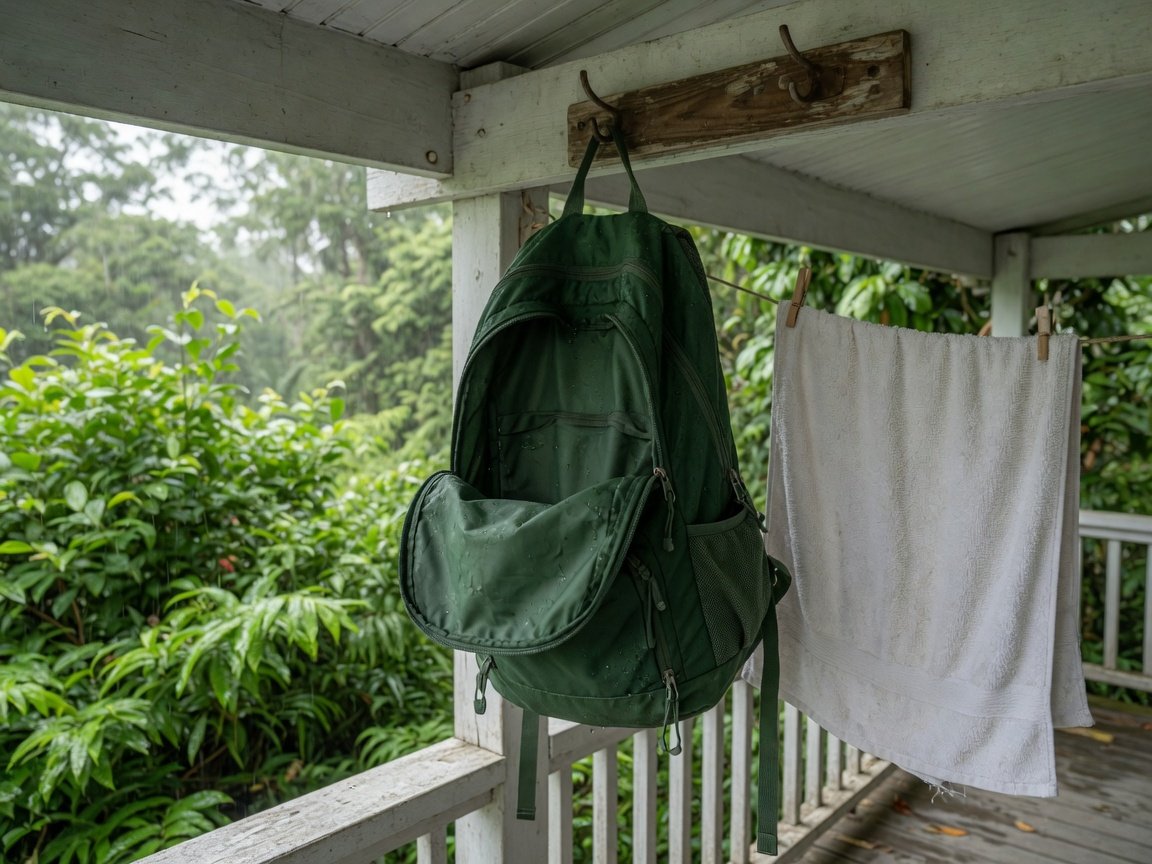
- Hang the pack upside down with every zipper open. Inverting it lets water drain from all compartments instead of pooling at the bottom.
- Stuff the interior loosely with dry towels or crumpled newspaper to maintain shape and absorb interior moisture as it evaporates.
- Air dry in a ventilated indoor spot away from direct sunlight. UV exposure fades colors and degrades nylon fibers over time — a shaded spot with good airflow is ideal.
- Allow 24–48 hours for full drying. Thick padded shoulder straps and hip belts hold moisture far longer than the main fabric panels. Press into the padding — if it still feels cool or slightly damp, give it more time.
- Never use a clothes dryer. Heat damages DWR coatings, warps plastic buckles and adjustment hardware, and can melt seam tape on waterproof packs. Even a low-heat cycle causes cumulative damage over time.
- Reinsert the frame sheet only after the pack is completely dry. Trapping moisture inside the frame sleeve creates ideal conditions for mold growth.
Storing even a slightly damp pack can lead to mold and mildew within 24 hours in warm conditions. The staining and odors mold leaves behind are often permanent. When in doubt, add another few hours of drying time. Building good habits around post-wash care is one of the highest-impact things you can do for pack longevity — practical backpack care tips for lasting durability are worth keeping in your routine alongside washing.
How Do You Remove Odors from a Backpack?
Sometimes a full wash doesn’t completely eliminate a smell — or you need a quick fix between washes. A few targeted methods work reliably without chemicals that harm fabrics.
- Baking soda: Sprinkle a generous amount inside the main compartment, close all zippers, and leave overnight. Shake thoroughly in the morning. Baking soda absorbs odors without any moisture, making it safe for all materials.
- White vinegar spray: Mix equal parts white vinegar and water in a spray bottle. Lightly mist the interior and let the pack air out for several hours. The vinegar smell dissipates completely as it dries, taking most odors with it.
- Activated charcoal sachets: Place two or three small sachets inside and leave overnight. These are especially effective for gym smells and musty storage odors, and they can be reused for months.
- Fresh air circulation: A few hours hanging in outdoor shade eliminates mild odors without any products at all. One to two hours on a shaded porch handles most light smells after a day of use.
For persistent sweat smells embedded deep in shoulder straps, a targeted scrub with a toothbrush dipped in diluted white vinegar — followed by thorough rinsing and full air drying — usually solves even the most stubborn cases.
How Often Should You Wash Your Backpack?
Frequency depends on how hard you use the pack. There’s no universal answer, but this breakdown covers most use cases.
| Use Type | Recommended Wash Frequency |
|---|---|
| Daily commute or school bag | Every 1–2 months |
| Gym or sports bag | Every 2–4 weeks |
| Weekend hiking daypack | After every 3–5 uses, or when visibly dirty |
| Multi-day backpacking pack | After every trip |
| Travel carry-on or checked bag | After every trip |
| Occasional or seasonal use | Once per season |
The most common mistake is waiting until the pack is visibly grimy. Sweat, body oils, and embedded grit are mildly abrasive — they gradually degrade fabric fibers even when the pack looks clean from the outside. Washing more often with gentle methods is far better for long-term pack health than washing rarely with harsh products.
If you use your pack in wet or exposed conditions frequently, a good rain cover between washes reduces how much grime accumulates and extends the time between full cleanings. The guide to the best backpack rain covers covers options across a range of pack sizes and shapes if you don’t already have one.
Frequently Asked Questions About Washing a Backpack
Can I put my backpack in the washing machine?
Yes, if it’s a soft-sided pack without metal frames, rigid stays, or bonded back panels. Remove all frames and detachable components, place the pack in a mesh laundry bag, select the gentle cycle with cold water, and use a small amount of mild liquid detergent. Air dry immediately after — never use the dryer. For a complete breakdown of which packs are machine-safe and which aren’t, the guide on machine washing backpacks covers it in detail.
How do I wash a backpack without ruining it?
Use lukewarm water, mild detergent, and a soft brush. Remove rigid components before washing, rinse until the water runs completely clear, and air dry upside down with all zippers open. Avoid the dryer, bleach, fabric softener, and enzyme-based cleaners. Hand washing is always the safest default when you’re uncertain about a pack’s construction or coating.
How do I get a musty smell out of my backpack?
Sprinkle baking soda inside the main compartment, close all zippers, and leave overnight — then shake it out thoroughly in the morning. For stronger musty smells, lightly spray the interior with a 50/50 mix of white vinegar and water and air dry fully before use. Activated charcoal sachets work well for storage-related mustiness and can be reused repeatedly. Always make sure the pack is completely dry before zipping it closed again to prevent the smell from returning.
Can I wash a backpack that has a metal frame?
Hand wash only. If the frame is designed to be removable — most internal frame sheets slide out through a sleeve at the back panel — take it out and wash it separately with a damp cloth. If the frame is fixed, hand wash the pack carefully without submerging the frame section if possible. Never machine wash a pack with non-removable metal stays — the spin cycle bends them and can permanently damage the frame channels.
How long does a backpack take to dry after washing?
Most backpacks need 24–48 hours to dry fully when air dried indoors. Packs with thick foam shoulder straps or padded hip belts take the longest — the foam holds moisture long after the outer fabric feels dry. Hanging the pack upside down with all zippers open and loosely stuffing the interior with dry towels speeds up the process. Never use a dryer, even on a low setting.
Can I wash a leather backpack?
No — not with water submersion. Leather backpacks need spot cleaning only: a barely damp cloth with a leather-specific cleaner, followed by leather conditioner to restore moisture and flexibility. Water can stain, stiffen, and crack leather permanently. If the pack needs deeper cleaning, use products formulated specifically for leather and always test on a hidden area first.
What is the best soap for washing a backpack?
Mild liquid detergent, baby shampoo, or a gear-specific cleaner work best. Baby shampoo is a solid everyday choice — it’s gentle on technical fabrics, affordable, and rinses out cleanly without leaving residue. Avoid powder detergents (they don’t rinse fully), bleach, fabric softener, and enzyme stain removers. All of these attack the DWR coating that many packs depend on for water resistance.
What Should You Do After Washing Your Backpack?
Washing is one part of keeping a pack in top condition. Once it’s fully dry, a few follow-up steps make a real difference in how the pack performs going forward.
- Reapply DWR treatment if needed. After washing, the water-repellent finish on many hiking and outdoor packs diminishes noticeably. If water no longer beads on the surface and instead soaks in, apply a wash-in or spray-on DWR treatment before your next use.
- Lubricate the zippers. Run a beeswax-based zipper lubricant along the teeth after washing. This keeps them sliding smoothly and prevents the corrosion that accelerates zipper failure on packs used outdoors.
- Inspect straps, buckles, and seams. A freshly cleaned pack reveals wear and damage that grime obscures. Look for fraying at high-stress points, buckle cracks, and seam separation before they become bigger problems.
- Store properly. Keep the pack in a cool, dry location with zippers slightly open for airflow. Avoid compressing it in a tight space — hanging it or storing it open preserves the shape of padded sections.
- Build a regular maintenance routine. Spot clean after trips, do a full wash every 1–3 months, and re-apply DWR seasonally. This cadence keeps most packs looking and performing well for five years or more.
A clean, well-maintained pack genuinely outlasts a neglected one by years. The time investment is minimal — 30 minutes of washing every couple of months — and the return is a pack that holds up through years of hard use instead of falling apart after two.
“`
—