Backpack back pain is one of the most common and most preventable physical complaints around — and the fix is usually faster than people expect. In most cases, three changes deliver near-instant relief: adjusting your straps, repacking your load, and doing a few targeted stretches. No doctor’s visit required, and no new gear necessary — at least not yet.
Key Takeaways
- Most backpack back pain is caused by improper strap fit, excessive weight, or carrying the bag too low on your spine.
- Orthopedic guidelines recommend keeping your backpack at or below 10% of your body weight for daily carry.
- Repositioning your bag so it sits within 2 inches above your hips reduces spinal compression dramatically.
- A combination of smart repacking, daily stretching, and core-strengthening exercises delivers the most lasting relief.
Why Does Your Backpack Hurt Your Back?
Your spine is impressively resilient — but it wasn’t designed to absorb a heavy, unbalanced load day after day. When a backpack pulls away from your body or hangs unevenly, the muscles of your lower back take on the work of keeping you upright. Do that for long enough, and those muscles get overworked, inflamed, and painful.
The American Academy of Orthopedic Surgeons recommends that backpacks weigh no more than 10–15% of the carrier’s body weight. For a 150-pound adult, that puts the safe upper limit at 15–22 pounds. Most people — especially students and commuters — regularly blow past that threshold without realizing it.
Three factors drive the vast majority of backpack-related back pain:
- Overloading — too much total weight compresses the spinal discs and strains lumbar muscles.
- Poor fit — a bag that hangs too low shifts your center of gravity backward, forcing you to lean forward to compensate. That compensation posture is exhausting for your spinal erectors.
- Bad weight distribution — heavy items packed in the front or at the bottom create twisting and pulling forces the spine has to constantly fight against.
The good news? Every single one of these is fixable without spending a cent — starting right now.
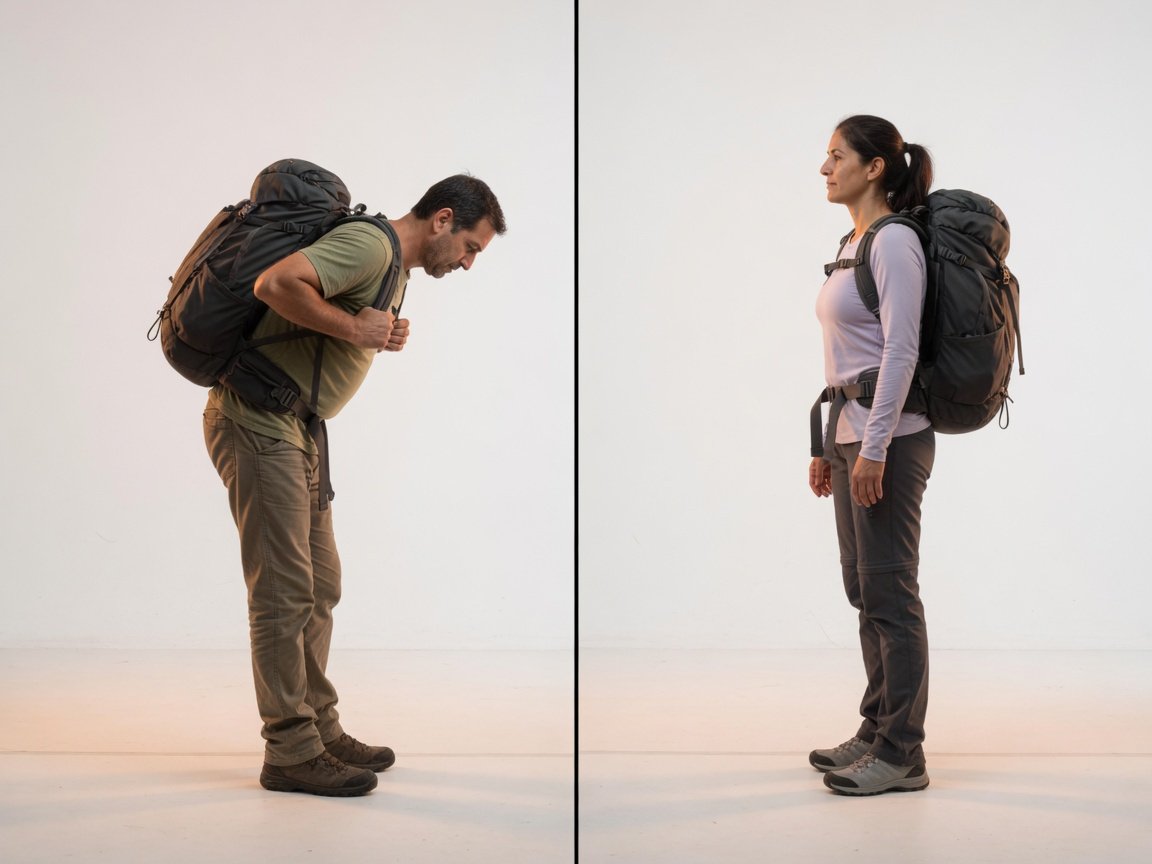
How Do You Adjust Your Backpack to Stop Back Pain Right Now?
Strap adjustment is the single fastest fix — and the one most people skip entirely. Physical therapists consistently identify improper strap length as the number one mechanical contributor to backpack back pain. Fixing it takes about 60 seconds.
Here’s a step-by-step fit adjustment you can do before you take another step:
- Load your bag with everything you normally carry, then put it on while standing with your feet hip-width apart.
- Tighten the shoulder straps until the pack sits flush against your upper back — there should be no gap between the bag and your spine.
- Position the bottom of the bag so it rests 2 inches above your hip bones. Not mid-back, not sagging toward your glutes — right above the hips.
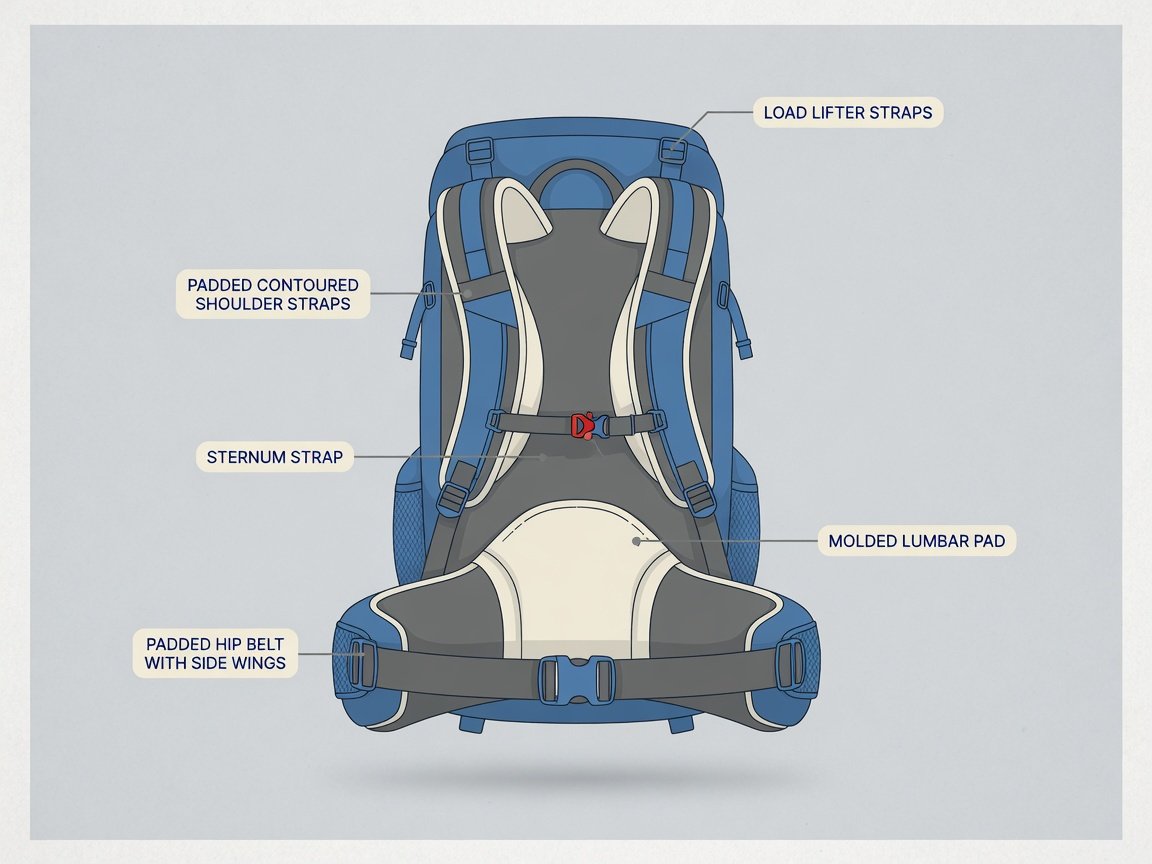
- Clip and tighten the hip belt (if your bag has one) so the padded sections wrap over your hip bones. A properly engaged hip belt transfers 60–70% of the load from your spine to your hips — the strongest, most load-tolerant part of your body.
- Fasten the sternum strap across your chest. It should feel snug but not constricting. This stops the shoulder straps from sliding outward and stabilizes the whole pack.
- Pull the load lifter straps — those short diagonal straps at the top of the shoulder straps on technical hiking packs — until the bag angles toward you at roughly 45 degrees. This pulls the weight into your body rather than away from it.
After adjusting, walk around your space for a minute. The pack should feel notably higher and lighter even though you haven’t removed anything. That shift alone takes real pressure off the lumbar spine.
What’s the Right Way to Pack a Backpack to Avoid Back Pain?
How you pack is almost as important as how you wear it. The goal is dead simple: keep the heaviest items as close to your spine and as high as possible. This minimizes the lever-arm effect — the mechanical force that increases the further weight gets from your body’s center.
The most back-friendly packing system works in three layers:
- Layer 1 (closest to your back): Your heaviest items — laptop, textbooks, water bottle, dense gear. These ride right against your spine where the weight is easiest to manage.
- Layer 2 (middle): Medium-weight items like a change of clothes, light tools, or food.
- Layer 3 (outer pockets and front): Lightweight, frequently accessed items — phone, keys, charger, earbuds.
Ergonomics research has demonstrated that placing heavy items close to the back, rather than at the front or bottom of the pack, can reduce spinal compressive forces by nearly half. That means the same bag, same contents, same body — dramatically less stress on your spine just from rearranging things.
Once you’ve rearranged, it’s worth doing a weight audit too. Most people carry 20–30% more than they actually need for any given day. Cutting deadweight is the most permanent solution to backpack back pain — and the one that requires zero ongoing effort. For a deeper look at how load positioning affects your spine, the full guide to mastering backpack weight distribution walks through the mechanics for every bag type.
Which Stretches Give the Fastest Relief From Backpack Back Pain?
Stretching won’t undo poor mechanics — but it absolutely delivers real, fast relief when your muscles have tightened up after a long carry. These four moves hit the exact muscle groups that bear the brunt of backpack stress.
1. Standing Chest Opener
Clasp your hands behind your back, squeeze your shoulder blades together, and gently lift your arms while opening your chest toward the ceiling. Hold for 20–30 seconds. This reverses the forward-rounding posture that develops when you carry weight in front of your spine all day.
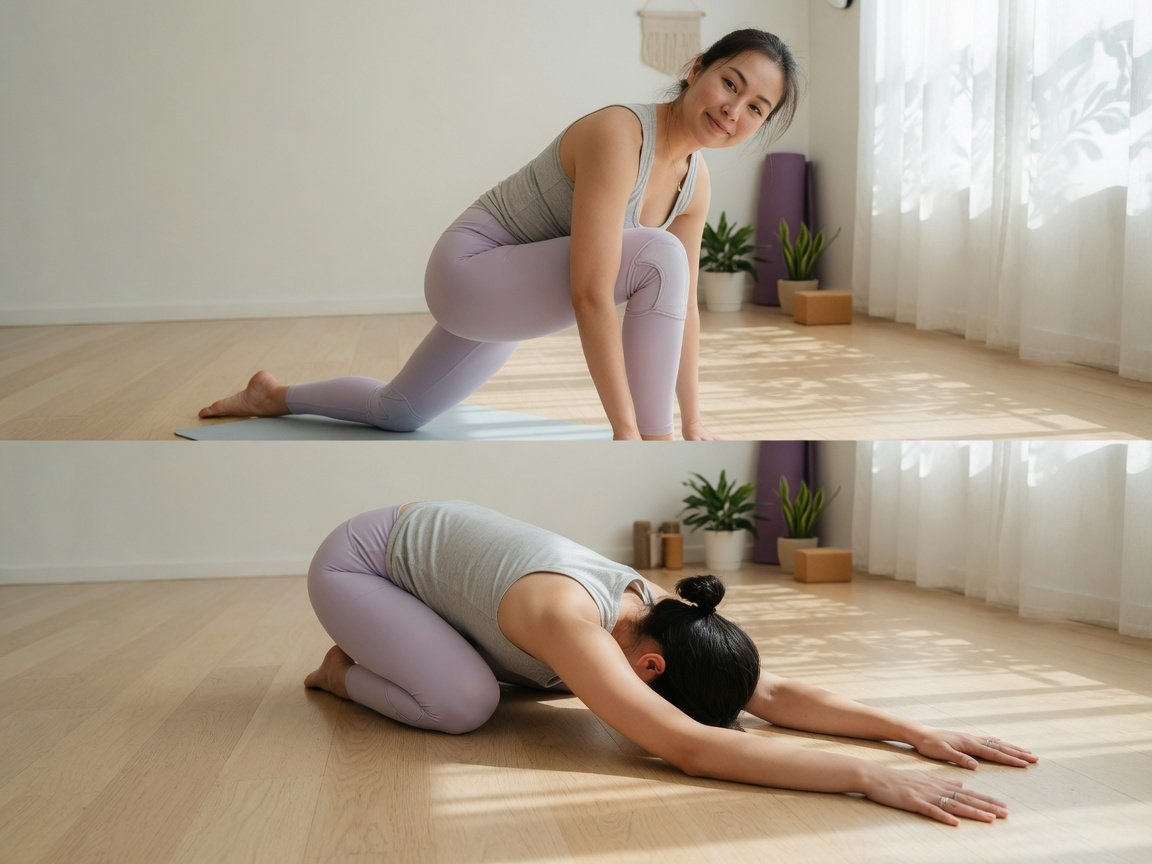
2. Hip Flexor Lunge Stretch
Step one foot forward into a lunge, lower your back knee gently to the ground, and push your hips forward while keeping your torso upright. You’ll feel a deep stretch through the front of your rear hip. Hold 30 seconds per side. Tight hip flexors are a surprisingly common hidden cause of lower back pain — they pull the pelvis into an anterior tilt and exaggerate lumbar arch under load.
3. Child’s Pose
Kneel on the floor, sit back toward your heels, and reach your arms forward along the ground. Let your chest and forehead sink toward the floor and breathe deeply. Hold for 30–60 seconds. This gently decompresses the lumbar spine — almost the opposite of what happens when you stand under a heavy pack for hours.
4. Cat-Cow Spinal Mobilization
On all fours with a neutral spine, alternate between arching your back up toward the ceiling (cat) and letting it drop toward the floor (cow). Move slowly, breathing through each position. Perform 10–15 repetitions. This promotes circulation to the intervertebral discs — the spongy cushions between your vertebrae — and is especially effective as an evening wind-down after a heavy carry day.
Physical therapists recommend performing this routine both before putting your backpack on and immediately after taking it off. Research suggests that people who incorporate structured stretching around their carry time report significantly less next-day muscle soreness than those who skip it entirely. Ten minutes is all it takes.
Can Strengthening Exercises Protect Your Back From Backpack Pain Long-Term?
Yes — and this is where the real, lasting fix lives. Stretching treats symptoms. Strength training addresses the root cause. When your core, glutes, and upper back are strong, they absorb and share the load your spine would otherwise handle alone. The result is a back that holds up better under any carry situation, not just today’s bag.
Three exercises that directly target backpack-related back pain:
- Dead bugs: Lying on your back, extend the opposite arm and leg simultaneously while keeping your lower back pressed flat to the floor. This builds the deep core stability that protects your spine under dynamic loads — like walking with a heavy pack.
- Glute bridges: Lying on your back with knees bent, drive your hips toward the ceiling and squeeze your glutes at the top for 2 seconds. Strong glutes reduce the demand on lumbar erectors during prolonged standing and walking — two activities that combine badly with a poorly fitted backpack.
- Resistance band rows: Anchor a band at chest height, hold one end in each hand, hinge slightly at the hips, and pull the band toward your ribcage while squeezing your shoulder blades together. This directly strengthens the rhomboids and mid-trapezius — the muscles responsible for keeping your shoulders from rolling forward under a heavy pack.
Aim for 3 sets of 10–15 reps, three times per week. Most people feel a meaningful difference in back resilience within 4–6 weeks. The American Physical Therapy Association reports that targeted core strengthening programs significantly reduce the frequency and severity of recurrent back pain episodes in adults who carry heavy loads regularly.
One thing worth noting: backpack back pain and shoulder pain often travel together. If your upper back and shoulders are also involved, the expert advice in this guide to relieving shoulder pain from your backpack pairs well with this routine.
What Backpack Features Actually Prevent Back Pain?
If you’ve already dialed in your fit and packing and still struggle with pain, your bag itself may be part of the problem. Not all backpacks are designed with spinal health in mind — and some popular styles actively work against it.
Here’s what to look for in a back-friendly pack:
| Feature | Why It Helps Your Back |
|---|---|
| Padded, contoured shoulder straps | Distributes load evenly across the shoulder joint without cutting into soft tissue |
| Hip belt with padding | Transfers 60–70% of total pack weight from your spine to your hips and glutes |
| Sternum strap | Stabilizes shoulder straps and prevents the pack from swaying side to side with each step |
| Lumbar pad or internal frame | Supports the natural inward curve of your lower back and keeps the bag from sagging away from your spine |
| Load lifter straps | Allows fine-tuning of pack angle so weight presses into your body rather than pulling away from it |
| Ventilated back panel | Reduces heat and friction — though ensure the air gap doesn’t push the pack so far from your back it cancels out the support |
Total bag weight matters here too. If your current pack is heavy before you put anything in it, that’s baseline weight your back has to carry all day. Switching to a lightweight travel backpack built with your back in mind can knock off several pounds from your carry weight before you’ve packed a single item — and that adds up fast over long days.
For people who carry heavy loads every single day as part of their job — nurses, teachers, first responders, field workers — ergonomic design is non-negotiable. The curated list of the best backpacks for people with back problems is purpose-built for exactly that kind of sustained daily heavy use.
What Are the Most Common Backpack Mistakes That Cause Back Pain?
Most backpack-related back pain isn’t caused by freak accidents — it’s the slow accumulation of small, repeated habits nobody told you were harmful. Here are the biggest offenders and exactly how to break them.
- Slinging it over one shoulder. It feels casual and easy, but forces your spine to laterally bend just to keep you balanced. Every step compounds the strain. Use both straps, every time — no exceptions.
- Letting the bag hang low. A pack that swings below your waist acts like a pendulum, pulling your lower back backward with every stride. Tighten your shoulder straps so the bag rides higher.
- Packing heavy things in the front pocket. Heavy items in the front compartment pull the bag away from your body and forward, which forces your back muscles to constantly resist that pull. Keep dense items in the main compartment, closest to your spine.
- Never readjusting after adding items. Adding even a few extra pounds shifts how the bag sits on your back. Get in the habit of checking your straps whenever you significantly change what’s in the bag.
- Choosing style over structure. Ultraflat bags, frameless packs, and single-strap slings look great, but they offer zero structural support for heavy loads. If you’re regularly carrying more than 10–15 pounds, structure and support aren’t optional.
- Ignoring early warning signs. A little aching after a long day can feel easy to brush off. But chronic low-grade strain that goes unaddressed can quietly develop into a real injury. Don’t wait until it’s debilitating to make changes.
Studies of student populations consistently find that the majority carry backpacks heavier than recommended weight limits — and of those, a large proportion report chronic back and shoulder pain during the school year. That’s an enormous amount of preventable discomfort, caused almost entirely by habits that are easy to change.
When Should You See a Doctor About Backpack Back Pain?
The strategies in this article resolve the vast majority of backpack-related back pain. But there are situations where self-care isn’t enough — and knowing when to escalate is important.
See a doctor or physical therapist if you experience any of the following:
- Pain that radiates down one or both legs — this can signal nerve compression or disc involvement
- Numbness, tingling, or weakness in your legs or feet
- Back pain that wakes you up at night
- Pain that persists for more than 2–3 weeks despite consistent self-care
- Visible posture changes — one shoulder sitting measurably higher than the other, or an exaggerated forward lean
- Pain that followed a fall, sudden strain, or heavy lift
These symptoms can indicate disc herniation, nerve compression, or pre-existing spinal conditions being aggravated by backpack use. A musculoskeletal specialist can diagnose the underlying cause and design a targeted treatment plan that goes well beyond what self-care can address.
For younger carriers, the stakes are higher. Spine health literature notes that adolescents who regularly carry loads above 15% of their body weight can show measurable changes in spinal curvature over time. Developing spines deserve extra caution — and it’s worth having the conversation with a pediatrician or orthopedist if a child regularly reports backpack-related pain.
Frequently Asked Questions About Relieving Back Pain From a Backpack
How heavy should a backpack be to avoid back pain?
Orthopedic and physical therapy guidelines are consistent here: keep your backpack at or below 10% of your body weight for everyday carry. For hiking or multi-day travel with a properly fitted pack and hip belt, up to 15% is generally considered safe for healthy adults. So if you weigh 160 pounds, your fully loaded bag should stay under 16–24 pounds depending on your activity and pack design.
Can wearing a backpack every day permanently damage your back?
For adults, daily backpack use within safe weight limits is generally fine. It’s chronic overloading — carrying too much, too often, with poor fit — that causes damage. Over time, that can accelerate disc wear and create persistent muscle imbalances. The good news is that most backpack-related back problems are reversible if caught and addressed early. For adolescents, the risk is higher because the spine is still developing, so the weight limits matter even more.
Is a two-strap backpack better for your back than a one-strap messenger bag?
For your back, yes — significantly. Two-strap backpacks distribute load symmetrically across both shoulders and along the spine. Single-strap bags force your body to compensate for uneven weight, which creates lateral bending in the spine and muscle imbalances on one side. If you love the look of a messenger bag or sling, the key is keeping it light and switching carrying sides regularly throughout the day.
Does the type of backpack matter, or is it all about how you wear it?
Both matter — and neither alone is enough. A well-designed ergonomic backpack with padded straps, a hip belt, and a lumbar pad makes it much easier to wear the bag correctly. But even the most expensive technical pack becomes a back-pain machine if you overload it, fit it wrong, or pack it carelessly. Think of the bag as your foundation and the fit adjustment as the finishing work. You genuinely need both.
How long does backpack back pain take to go away?
Mild muscle soreness from a single hard carry day typically resolves within 24–72 hours with rest, stretching, and appropriate heat or ice. Chronic pain that’s built up over weeks or months of poor habits usually takes 4–8 weeks of consistent rehabilitation — better mechanics plus stretching plus strengthening — to fully resolve. If pain doesn’t meaningfully improve within two to three weeks of changing your habits, that’s the time to see a physical therapist.
Should I use heat or ice for backpack back pain?
It depends on when the pain started. For acute pain immediately after or the day following a heavy carry, ice for 15–20 minutes helps reduce inflammation in the affected muscles. For ongoing, chronic muscle stiffness that’s developed over time, heat works better — a warm shower or heating pad for 15–20 minutes before your stretching session loosens tight tissue and makes the stretches significantly more effective.
Your Action Plan: How to Relieve Back Pain From a Backpack Starting Today
Backpack back pain is one of the most preventable discomforts out there — and the solution almost always comes down to a handful of small, deliberate changes. Here’s your exact timeline:
- Right now: Readjust your shoulder straps so the bag sits within 2 inches above your hips and presses flush against your back. Engage the hip belt if you have one.
- Today: Reorganize your bag so the heaviest items ride closest to your spine in the main compartment.
- Today: Do the four-stretch routine — chest opener, hip flexor lunge, child’s pose, cat-cow — once before and once after wearing your pack.
- This week: Audit your pack weight. Pull everything out, weigh it if you can, and remove anything you don’t actively need that day.
- This week: Begin the core and back strengthening routine — dead bugs, glute bridges, and band rows — three times per week.
- This month: If your bag lacks a hip belt, padded straps, or lumbar support and you carry it daily, consider upgrading to a back-health-focused design.
Most people who follow these steps consistently notice significant improvement within the first week. Your body is remarkably adaptive — give it better conditions, and it responds faster than you’d think.