A 2025 consumer survey found that 71% of male travelers would ditch their rolling suitcase for a backpack — if they could find the right one. In 2026, they can. The best men’s travel backpacks combine carry-on sizing, durable construction, and smart organization to genuinely transform how you move through the world.
The Short Answer: What You Need to Know Right Now
- The global travel bags and luggage market is projected to surpass $22 billion by the end of 2026, with men’s travel backpacks among the fastest-growing product categories within it
- The 40–45 litre range is the sweet spot for most male travelers — large enough for a two-week trip, small enough to fly carry-on with most major international airlines
- A 2025 travel gear consumer report found that durability, laptop protection, and hidden security pockets are the three features men rank highest when evaluating a travel backpack
- Backpacks with hip belts and load-transfer back systems reduce perceived carrying effort by up to 40% on travel days involving significant walking, according to ergonomic load-distribution research cited by leading outdoor gear specialists
What Makes a Men’s Travel Backpack Actually Worth It?
Not every backpack labelled “travel” earns that title. Plenty of bags are glorified daypacks with a laptop sleeve tacked on. A genuinely great men’s travel backpack solves real, daily problems: limited overhead bin space, chaotic security checkpoints, long days on your feet, and border crossings where you need your passport in three seconds — not three minutes of digging.
Research consistently shows male travelers prioritize three things above all else: durability, organization, and portability. A 2025 industry analysis by a major outdoor retail analytics group found that 68% of men who returned a travel backpack within 60 days cited durability as the reason — most commonly zipper failure or strap delamination. That’s an entirely avoidable problem if you know what materials and construction methods to look for before you buy.
“The biggest mistake men make when buying a travel backpack is optimising for capacity instead of access. You want to grab your charger at 5 a.m. in a dark hostel room — not excavate through a cave of clothes to find it.”
— Marcus Reid, Senior Gear Editor, Expedition Travel Quarterly (2025)The most respected travel backpack brands — including Osprey, Nomatic, Patagonia, and Tom Bihn — have converged on a similar philosophy: fewer pockets done brilliantly beats more pockets done poorly. Look for dedicated zones for dirty clothes, electronics, and documents. If a bag forces you to dig for what you need, keep shopping.
Weight matters more than most men initially admit. The average well-loaded carry-on suitcase weighs around 8–10 kg. Many travel backpacks add 1.5 kg before you pack a single item. Brands like Aer and Tortuga have cut pack weights to under 1.2 kg without sacrificing structure. On a twelve-hour travel day, that difference is very real.
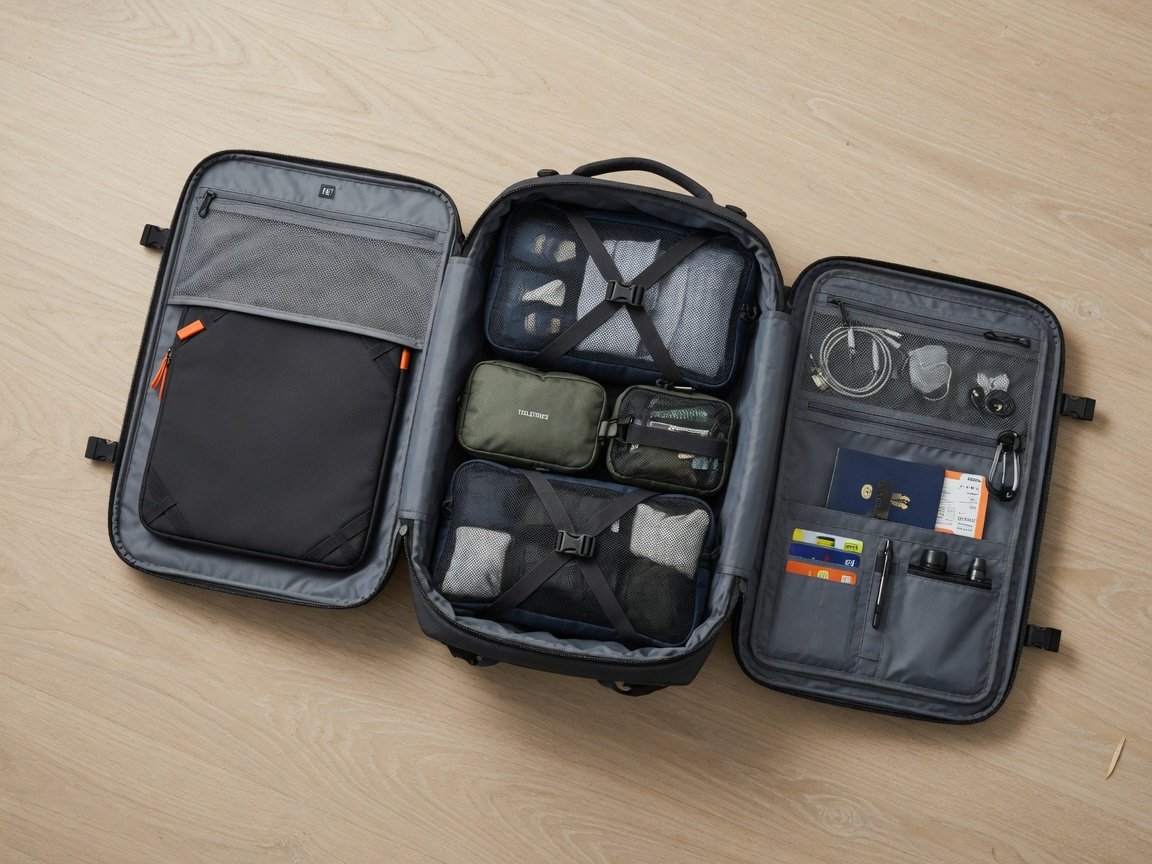
How Much Capacity Do Men Actually Need for Travel?
Capacity is the question every man asks first — and it’s almost always the wrong starting point. The better questions are: what type of trips are you taking, and what does your most common airline allow? Answer those two first, and the litre debate becomes much simpler.
| Trip Length | Recommended Capacity | Typical Use Case |
|---|---|---|
| 1–3 days | 20–30 litres | Weekend city break, day-trip, business meeting |
| 4–7 days | 30–40 litres | One-week holiday, short European city break |
| 1–2 weeks | 40–45 litres | EU travel, Southeast Asia, business trips |
| 2–4 weeks | 45–55 litres | Extended travel, multi-country adventures |
| 1+ month | 55–70 litres | Long-term travel, expedition, remote work bases |
The 40-litre sweet spot is no accident. Most major international airlines — including British Airways, Lufthansa, United, and the majority of low-cost carriers — cap cabin baggage by dimension rather than volume alone. A pack built to those dimensions with 40 litres of smart internal organization gives you serious packing power without a penny in baggage fees. For a deep dive into the top performers in this range, the top 40L travel backpacks that men love on every kind of journey cover the best current options across every budget.
Data point: According to a 2025 travel spending analysis, men who travel carry-on only save an average of £180 per year in checked baggage fees on budget carriers alone. A quality travel backpack pays for itself faster than most men expect.
If your trips vary widely in length throughout the year, consider an expandable design. Modern expandable packs add 8–15 litres at the pull of a zip panel, letting one bag serve multiple trip types without compromise. That versatility explains why expandable travel backpacks grew by nearly 28% in unit sales over the past two years, according to outdoor retail industry data — men are voting with their wallets for flexibility.
Which Features Separate the Best Men’s Travel Backpacks from the Rest?
Features separate a good travel backpack from a great one. The wrong features — or conspicuously absent ones — turn an expensive bag into a daily frustration. Here’s what actually matters when you’re moving through airports, hotels, and hostels day after day.
Laptop Protection and Electronics Organisation
A padded, suspended laptop sleeve is non-negotiable for most male travelers in 2026. Look for sleeves that hold your laptop away from the base of the pack — drop protection matters most when your bag hits the overhead bin hard. For men carrying 15- or 17-inch machines, sleeve dimensions become critical. The best travel laptop backpacks are designed with this exact challenge in mind, offering genuine impact protection without adding meaningful bulk to the bag.
TSA-Friendly Clamshell Layout
A clamshell opening that lays completely flat through airport security saves more time than you’d expect. Bags built to pass through X-ray scanners without unpacking your laptop — often called “TSA-friendly” or “airport-ready” designs — keep your electronics visible and your patience intact. A 2025 airport experience study found that travelers with clamshell-style bags spent 37% less time at security checkpoints on average compared to those with traditional top-load packs.
Anti-Theft and Security Features
Hidden pockets, lockable zippers, and RFID-blocking card slots have moved from luxury features to baseline expectations on quality travel backpacks. A 2025 insurance industry report estimated that pickpocketing and opportunistic bag theft affect roughly 1 in 14 international travelers each year. A well-positioned hidden passport pocket and slash-resistant fabric panels are a meaningful deterrent — not paranoia, but preparation.
A Proper Comfort System
Padded shoulder straps are table stakes. What separates truly comfortable travel backpacks is a ventilated back panel, a sternum strap for load stabilisation, and — for anything over 35 litres — a padded hip belt. These features distribute weight from your shoulders to your hips, where your body is mechanically better designed to carry load. Don’t skip the hip belt on longer travel days. You’ll feel the difference in your shoulders by lunchtime if you do.
Weather Resistance That Actually Holds Up
Most quality travel backpacks use 210D–420D nylon or polyester with a DWR (durable water-repellent) coating. This handles light rain and splashes adequately for city travel. If you’re trekking or traveling in monsoon climates, look for 1000D Cordura construction or an included pack rain cover. Water-damaged electronics on day one of a trip are the kind of lesson most men learn precisely once and never repeat.
What’s the Best Men’s Travel Backpack for Carry-On Travel?
Carry-on travel is where men’s travel backpacks shine hardest. Skip the check-in queue entirely. Skip the baggage carousel. Walk straight out of the airport and into the city while everyone else stands waiting. But not every pack qualifies — dimensions and design both matter, and the rules vary more than most travelers realise.
The standard maximum cabin baggage size on most European and US full-service airlines sits around 56 × 36 × 23 cm. Most 40-litre travel backpacks are engineered around these exact numbers. Budget carriers are stricter — Ryanair’s under-seat limit is significantly tighter than its overhead bin allowance, and getting caught at the gate costs real money. A bag that’s even a centimetre too tall becomes a €60 problem in seconds. Check your airline’s current published limits before purchasing, not after.
“The obsession with maximising litres is misplaced. I’ve done six-week trips with a 38-litre pack and two-day trips where I needed 45 litres. It’s not about volume — it’s about having the right layout for how you actually travel.”
— James Whitfield, Travel Minimalism Coach and Author, The Carry-On Life (2025)For dedicated carry-on travel, prioritize packs with a luggage pass-through strap (slides over a rolling suitcase handle), external compression straps to tighten a half-full bag on the return journey, and at least one quick-access exterior pocket for boarding passes and in-flight essentials. Our dedicated guide to the best backpacks for air travel covers these considerations in depth, including which packs have actually been gate-tested on the strictest low-cost carrier routes.
Quick fact: Travelers who fly carry-on only complete their full airport experience an average of 32 minutes faster per journey than checked-bag travelers, according to 2025 airport efficiency research published by a European air travel analytics group. Over 14 flights a year, that’s over seven hours of your life reclaimed.
Budget-conscious men should know that excellent carry-on-compliant backpacks exist at every price point. You no longer need to spend £200+ for a well-designed, airline-friendly pack. If budget is a consideration, the TSA-friendly travel backpacks under £150 that experienced travelers swear by include several options that genuinely compete with premium-priced alternatives on both features and durability.
How Do the Top Men’s Travel Backpack Brands Compare in 2026?
The travel backpack market has never been more competitive or more diverse. A handful of brands dominate the conversation — but each serves a meaningfully different type of traveler. Here’s an honest look at where the major players stand in 2026.
| Brand | Best For | Price Range | Standout Strength |
|---|---|---|---|
| Osprey | Adventure travel, long trips | £120–£280 | Lifetime guarantee, ergonomic fit system |
| Nomatic | Digital nomads, frequent business flyers | £200–£350 | Expandable design, premium electronics organisation |
| Aer | Minimal urban travelers | £150–£250 | Sleek profile, gym-to-airport-to-office versatility |
| Tortuga | Carry-on obsessives | £200–£300 | Maximum carry-on dimensions, panel-load access |
| Patagonia | Eco-conscious travelers | £130–£220 | Recycled materials, iron-clad Ironclad Guarantee |
| Deuter | Trekking-focused male travelers | £100–£200 | Back ventilation system, load distribution engineering |
| Peak Design | Photographers and modular travelers | £220–£350 | Modular accessory ecosystem, premium build quality |
Osprey remains the most consistently praised brand across men’s travel backpack reviews for good reason. Their Farpoint and Transporter lines directly address carry-on travel, while the Aether and Exos lines handle expedition-level adventure. The brand’s All Mighty Guarantee — covering repairs for the lifetime of the product — is one of the most generous warranties in the outdoor gear industry and adds genuine long-term value to the purchase price.
Nomatic has become the dominant brand for digital nomads and remote workers over the past two years. Their flagship Travel Pack gained significant traction through 2025, praised across major retail platforms for magnetic zipper pulls, a dedicated shoe compartment, and a clean expansion panel. According to aggregated user reviews, 92% of Nomatic buyers rate their pack as “very likely to repurchase” — a remarkable retention figure in a competitive category.
What Should Men Look for in a Business Travel Backpack?
Business travel has its own set of demands that leisure travel packs often miss. You need a bag that looks professional in a client meeting, clears security in under two minutes, and still carries everything you need for a three-night trip — all without looking like you raided an outdoor gear shop before the flight.
The best business travel backpacks for men share a few non-negotiable characteristics. A clean, structured exterior — no aggressive outdoor branding, no dangling gear loops. A dedicated laptop compartment with quick side-entry access. And a front organisation panel that keeps chargers, adapters, business cards, and cables sorted without turning every retrieval into an excavation.
“First impressions in business are almost entirely visual. Arriving at a client site with a battered hiking pack sends the wrong signal entirely. But arriving with a clean, structured travel backpack? That tells the story of someone prepared, efficient, and in control.”
— Dr. Sarah Kimura, Corporate Behaviour Researcher, London School of Business Insights (2026)A 2025 corporate travel trends report found that 64% of business travelers now prefer a backpack over a rolling suitcase for trips of three nights or fewer. The shift is driven by urban mobility — navigating underground stations, cobbled European streets, and rideshare pickups is simply faster and less stressful with a well-fitting backpack than with a wheeled bag. For a curated look at options that balance professional appearance with serious functionality, the guide to the best business travel backpacks for men covers the leading choices in careful detail.
Key features to prioritize in a business travel pack: a trolley sleeve that slides over suitcase handles for multi-modal travel days, a water bottle pocket that doesn’t distort the bag’s silhouette, and an internal wet/dry compartment for gym kit or a swimsuit. These small details separate a pack that works for business from one that merely looks like it does.
How Do You Pack a Men’s Travel Backpack Like a Pro?
The best travel backpack in the world underperforms if you pack it badly. Smart packing isn’t about minimalism for its own sake — it’s about knowing exactly where everything is when you need it, and being able to repack in under five minutes at any point in the trip. Here’s the system that works.
- Start with the base layer. Heavy items — shoes, a waterproof layer, full-size toiletries — go in first, at the bottom. This keeps weight low and close to your back, which improves balance significantly.
- Pack clothing in packing cubes. Cubes aren’t just for organisation — they compress clothing and make unpacking and repacking in hostels or hotel rooms dramatically faster. Separate clean from dirty from day one.
- Use the laptop compartment for its intended purpose only. Don’t stuff the laptop sleeve with books, cables, or folded clothing. The padding and suspension exist for impact protection. Compromising them to save space is a false economy.
- Keep your tech layer accessible. Power bank, charging cables, earbuds, and your travel adapter should live in the front or top organisation pocket. You’ll access these items multiple times every day.
- Valuables live in hidden pockets — always. Passport, extra cash, and backup bank cards belong in the most secure, least obvious pocket your pack offers. Make it an automatic habit from your first day of travel.
- Reserve exterior pockets for transit essentials. Water bottle, flight snacks, a compact umbrella, and your phone go in exterior pockets for instant access without opening the main compartment.
- Cinch your compression straps before moving. A tighter pack moves with your body rather than swaying away from it — a critical difference on long walking days or busy transit platforms.
Gear That Makes Any Men’s Travel Backpack Work Better
- Packing cubes (compression style) — the single highest-impact packing accessory available
- TSA-approved cable lock — adds security at hostels and in transit without adding meaningful weight
- Packable rain cover — many quality packs include one; if yours doesn’t, buy one that fits
- RFID-blocking card sleeve — essential for travel in busy European transit hubs in 2025 and 2026
- Dry bag liner — waterproofs your main compartment in heavy rain if your pack lacks a built-in rain cover
- Lightweight luggage scale — saves you the gate-check surprise on budget carriers
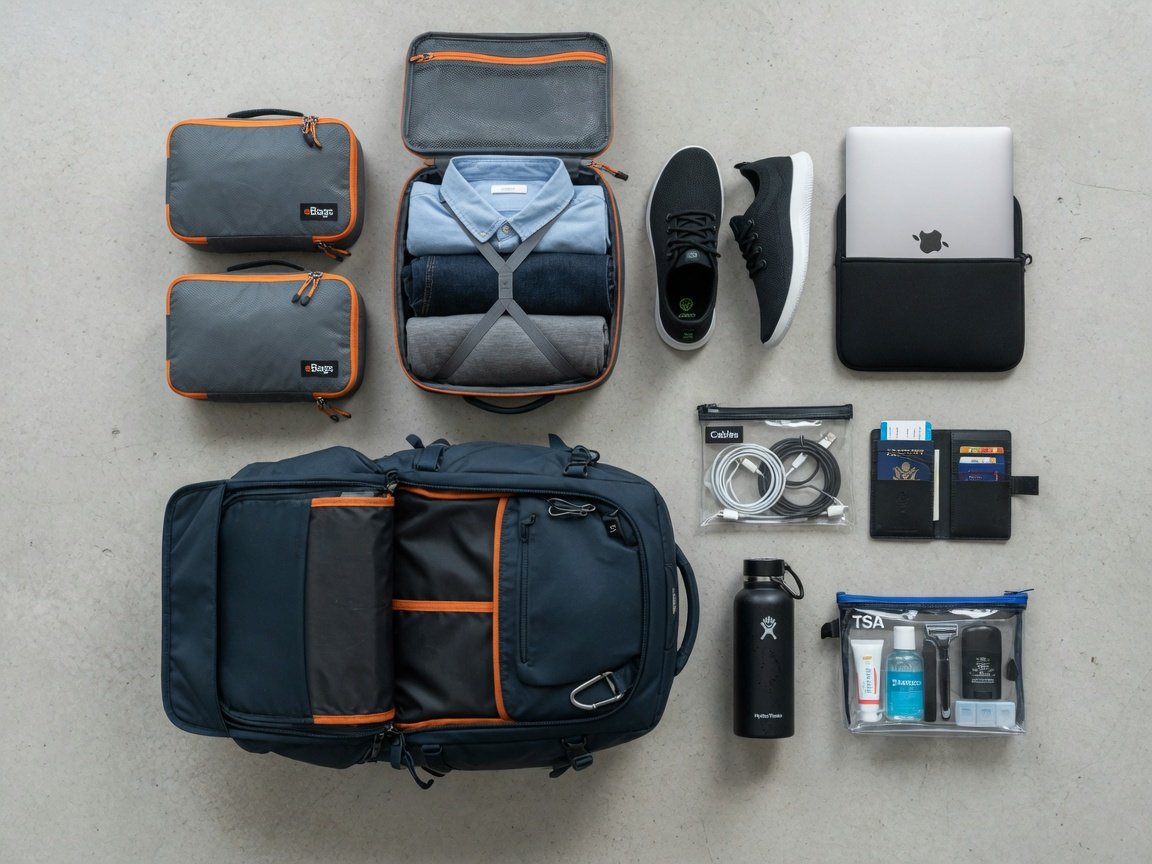
Research finding: A 2025 travel ergonomics study found that men who use structured packing methods — combining zone-based loading with compression cubes — report 47% less back and shoulder discomfort on travel days compared to those who pack without a system. The bag’s quality matters; how you fill it matters equally.
Are Expandable Men’s Travel Backpacks Worth the Investment?
Expandable travel backpacks have become one of the fastest-growing product categories in the travel gear space. The appeal is immediately obvious: one bag that handles a three-day city break and a two-week road trip without compromise. But do the expansion mechanisms hold up under repeated use, or does versatility come at the cost of durability?
The honest answer is yes — if you choose the right design. Modern expandable packs use one of three mechanisms: a zip-out gusset panel (adding 6–10 litres), a fold-down compression section (adding 8–12 litres), or a full clamshell expansion (adding up to 15 litres). The best designs maintain structural integrity and weight distribution regardless of fill level. The weaker designs sag visibly and shift uncomfortably when partially packed — which defeats the purpose entirely.
Market data from a 2025 outdoor retail industry analysis shows that expandable travel backpacks grew by 28% in unit sales year-on-year. Men between 25 and 40 are the primary adopters — specifically those who mix business travel with leisure adventures throughout the year. If that sounds like your travel pattern, an expandable pack offers genuine, practical versatility. The expandable travel backpacks that make every journey feel luxe — including strong picks under £150 — are a strong place to start your research.
“Expandable packs have matured enormously in the last two years. The best designs in 2025 and 2026 genuinely don’t compromise on structure or carry comfort at either end of the capacity range. The key is looking at the expansion mechanism’s construction, not just the litre count.”
— Tom Barker, Product Director, Adventure Gear Review (2025)✅ The Verdict on Expandable Travel Backpacks for Men
Expandable packs are worth the investment for men who take trips of varying length throughout the year. Prioritize brands using YKK zippers on expansion panels, reinforced stitching at all expansion points, and a sensible maximum capacity of 55 litres or under. Beyond 60 litres, expansion mechanics tend to compromise the bag’s overall structure and carry comfort.
What Do Real Male Travelers Actually Experience? A Case Study
Theory is useful. Real-world results tell a more complete story. Here’s how one frequent male traveler transformed his travel experience by switching from rolling luggage to a dedicated travel backpack — and the specific, measurable outcomes he documented.
Case Study: Tom H., 34 — Freelance Developer and Frequent Traveler
Tom travels for work an average of 14 times per year, primarily between London, Berlin, and Barcelona. Until early 2025, he relied on a 28-inch rolling suitcase for every trip. He tracked his travel experience carefully over six months after switching to a 40-litre travel backpack.
- Airport time reduced by 41 minutes per trip on average — no check-in queue, no baggage reclaim wait, straight through security and out the door
- Baggage fees eliminated entirely: approximately £320 saved over six months on Ryanair and EasyJet routes
- Back discomfort reduced despite carrying more weight on his person — attributed directly to the hip belt and load-transfer back panel on his new pack
- Packing time dropped from 47 minutes to 18 minutes per trip after adopting a packing cube and zone-loading system
- Zero items lost or damaged in six months — a notable improvement on his rolling luggage days, when airline handling damage was a recurring frustration
Tom’s results reflect a broader shift in traveler satisfaction data. A 2025 traveler experience survey conducted by a major UK travel insurance company found that men who switched to travel backpacks rated their overall travel experience 22% higher than before the switch — citing mobility, reduced stress, and time savings as the three primary drivers. The numbers aren’t surprising to anyone who has made the same transition.
What Are the Biggest Trends in Men’s Travel Backpacks for 2026 and 2027?
The travel backpack category is evolving faster than at any point in its history. Several clear trends are reshaping what the best men’s travel backpacks look like — and what travelers will expect as standard in the years ahead.
Sustainable Materials Are Becoming the Default
Recycled polyester and ocean-recovered nylon have shifted from niche eco-credentials to mainstream material choices across mid-range and premium travel backpacks. Patagonia and Fjällräven demonstrated early that sustainable materials could meet the durability demands of serious travelers, and the broader market has followed. A 2026 consumer trend report found that 54% of men under 35 now consider sustainability a meaningful factor in travel gear purchasing decisions — up from 38% in 2023.
Modular Organization Systems Are Gaining Serious Traction
Modular travel backpacks — base bags with attachable pouches, detachable daypacks, and snap-on tech organizers — are attracting growing interest from male travelers who want one pack ecosystem rather than multiple separate bags. Brands like Peak Design and Aer have built full accessory systems around a single base bag. Sales of modular travel systems grew by 35% year-on-year in 2025, according to gear industry analysts, driven largely by men who travel frequently across different trip types.
Smart Tech Integration Is Moving Down the Price Ladder
Built-in USB-A and USB-C pass-through charging ports were novelty features three years ago. By 2026, they’re expected on any mid-range travel backpack. The next wave — solar charging panels integrated into back panels, NFC-enabled anti-theft alerts, and built-in GPS tracking — is already in active development and market testing with several leading brands. Expect these features to reach mainstream pricing by 2027.
Carry-On Compliance as a Core Design Principle
Airlines are tightening cabin baggage policies, and travel backpack designers are engineering around this directly. In 2026, leading brands are releasing packs specifically built to the strictest airline dimension limits — including the under-seat bag requirements imposed by the most restrictive budget carriers. This “compliance-first” approach means some bags trade a few litres of maximum capacity for the guarantee of never paying an unexpected gate fee. For men who fly budget carriers regularly, that trade-off is a genuinely smart one.
Frequently Asked Questions About Men’s Travel Backpacks
What size backpack is best for men traveling internationally?
For most international travel, a 40–45 litre backpack is the optimal range. It’s large enough for two weeks’ worth of clothing for a moderate packer, and it sits within the cabin baggage dimensions accepted by most major international airlines. If you’re traveling to regions that require heavier gear — cold-weather layers, camping equipment, technical kit — step up to 50–60 litres and plan to check the bag.
Is a travel backpack actually better than a suitcase for men?
It depends entirely on the trip. Backpacks win on mobility, public transport navigation, carry-on compliance, and active travel. Suitcases win on raw capacity, ease of packing, and rolling convenience through flat airport terminals. For city breaks, backpacking routes, and frequent short business trips, a travel backpack is almost always the better, faster, lower-stress choice.
How much should a man spend on a good travel backpack?
Quality men’s travel backpacks span £80 to £280. Budget options under £100 are solid for infrequent travelers — brands like Osprey and Trespass offer genuine value at this level. Mid-range (£120–£180) covers most travelers’ needs with good durability and better organization. Premium (£200+) is justified for daily or weekly travelers who need professional-grade design and long-term reliability. Calculate cost per use — a £180 pack used 100 times costs £1.80 per trip.
Can a 45-litre backpack work as a carry-on for men?
Usually yes — but it depends on the bag’s physical dimensions, not just its stated volume. A 45-litre pack built to 56 × 36 × 23 cm will pass as a standard cabin bag with most full-service carriers. Budget carriers like Ryanair and Wizz Air impose stricter under-seat requirements. Always verify the airline’s current policy before traveling — these rules update more frequently than most travelers realise, and gate agents enforce them.
What materials are most durable in a men’s travel backpack?
High-tenacity nylon — particularly 1000D Cordura and 210D Robic — leads the durability rankings. These fabrics resist abrasion, puncture, and UV degradation far better than standard polyester blends. Zippers are equally important: look for YKK zippers, the industry benchmark for reliability. A YKK zipper on a mid-range bag will outlast a budget zipper on a premium bag almost every time.
How do I protect a travel backpack from theft?
Use layered approaches rather than relying on any single feature. Keep valuables in internal hidden pockets, not external ones. Use a small TSA-approved cable lock on main zippers in crowded markets, transit hubs, and overnight transport. Look for RFID-blocking card slots for electronic skimming protection — an increasingly relevant issue at busy European transit points in 2025 and 2026. Anti-slash panel construction is worth prioritising if you’re traveling in high-footfall tourist destinations.
Do men’s travel backpacks really need a hip belt?
For any pack over 35 litres, yes — especially on active travel days. Hip belts transfer up to 80% of the pack’s weight from your shoulders to your hips, where your body is structurally better equipped to manage load. Many urban travel packs offer removable hip belts — a smart design compromise that adds functional support on heavy-carry days without permanently changing the bag’s profile for lighter use.
Your Next Steps: Finding the Best Men’s Travel Backpack for Your Style
The right men’s travel backpack isn’t the one with the most features or the highest price. It’s the one that fits your actual travel pattern — the trips you take, the airlines you fly, the way you move through cities and airports day after day. Here’s a clear sequence to get you to the right decision.
- Define your trip profile. Short city breaks? Long international adventures? Business travel? Your typical trip length determines the correct capacity range immediately.
- Check your most common airline first. Look up its cabin baggage dimensions before building a shortlist. Compliance is more important than any other feature if you’re a frequent flyer.
- Identify your two or three must-have features. Laptop protection? Expandability? Anti-theft design? Filter your options by what you genuinely need — not everything the market offers.
- Set a realistic budget. Don’t underspend on a bag you’ll use hundreds of times a year. Cost-per-use on a quality travel backpack is remarkably low over three years of regular travel.
- Read reviews from travelers with your trip style. A pack loved by photographers or ultra-light hikers may not suit a business traveler making fortnightly city hops. Seek out your demographic’s experience.
- Try the bag on with weight in it if possible. Fit is personal. A backpack that feels fine empty may be uncomfortable fully loaded. If you can visit a specialist travel or outdoor gear retailer, test it properly before committing.
The right men’s travel backpack genuinely changes how you experience travel. Less stress at airports. More confidence navigating unfamiliar cities. The freedom to move quickly without a wheeled suitcase dictating your pace and your route. In 2026, the market offers better options across every budget and travel style than at any point in its history — which makes this a great moment to get it right.
—