Backpack straps are most commonly made from nylon webbing, with shoulder padding crafted from polyester fabric, neoprene, or EVA foam. Leather straps appear on heritage and fashion packs. Polypropylene webbing is used in budget and children’s bags. Each material directly shapes how comfortable, durable, and load-friendly your pack will be.
Executive Summary: Backpack Strap Materials at a Glance
- Nylon webbing is the industry gold standard — used in roughly 70% of performance backpacks because it balances tensile strength, low weight, and quick-dry properties.
- Neoprene padding retains approximately 15% less moisture than standard open-cell foam, making it the top choice for warm-weather or high-exertion carries in 2026.
- Leather straps can last 10–15 years with correct conditioning — a longer lifespan than most nylon systems despite the higher upfront cost.
- Eco-friendly options are growing fast: around 40% of major outdoor gear brands now offer at least one strap variant using recycled or bio-based materials, roughly double the figure from 2022.
Why Does Backpack Strap Material Matter More Than You Think?
Most people spend hours agonising over a backpack’s capacity, pockets, and colour. Then they barely glance at the straps. That’s a costly mistake. The shoulder straps are the entire interface between the pack and your body — the one place where engineering and anatomy actually meet. Get the material wrong and you’ll feel it in your shoulders within the first hour of carrying. Get it right and a heavy pack feels almost effortless.
Load carriage research consistently links shoulder and back discomfort to strap design — and material sits at the heart of that design. Sports ergonomics studies indicate that around 65% of regular backpack users report some level of shoulder discomfort, with inadequate padding material identified as a primary contributing factor in a significant proportion of those cases. The right material cushions the load, wicks moisture away, and maintains its shape over thousands of carries.
There is also a durability and safety dimension. A strap that frays, stretches out of adjustment, or degrades under UV exposure is not just uncomfortable — it is a potential safety risk, especially on trail with a heavy load. Knowing what your straps are made of tells you how to maintain them and when to replace them before a failure happens.
If you have ever ended a long carry with sore, red marks across your shoulders, the reasons why backpack straps cause discomfort — including the role of strap material — are worth understanding before you buy your next pack.
What Is Nylon Webbing, and Why Is It the Industry Standard?
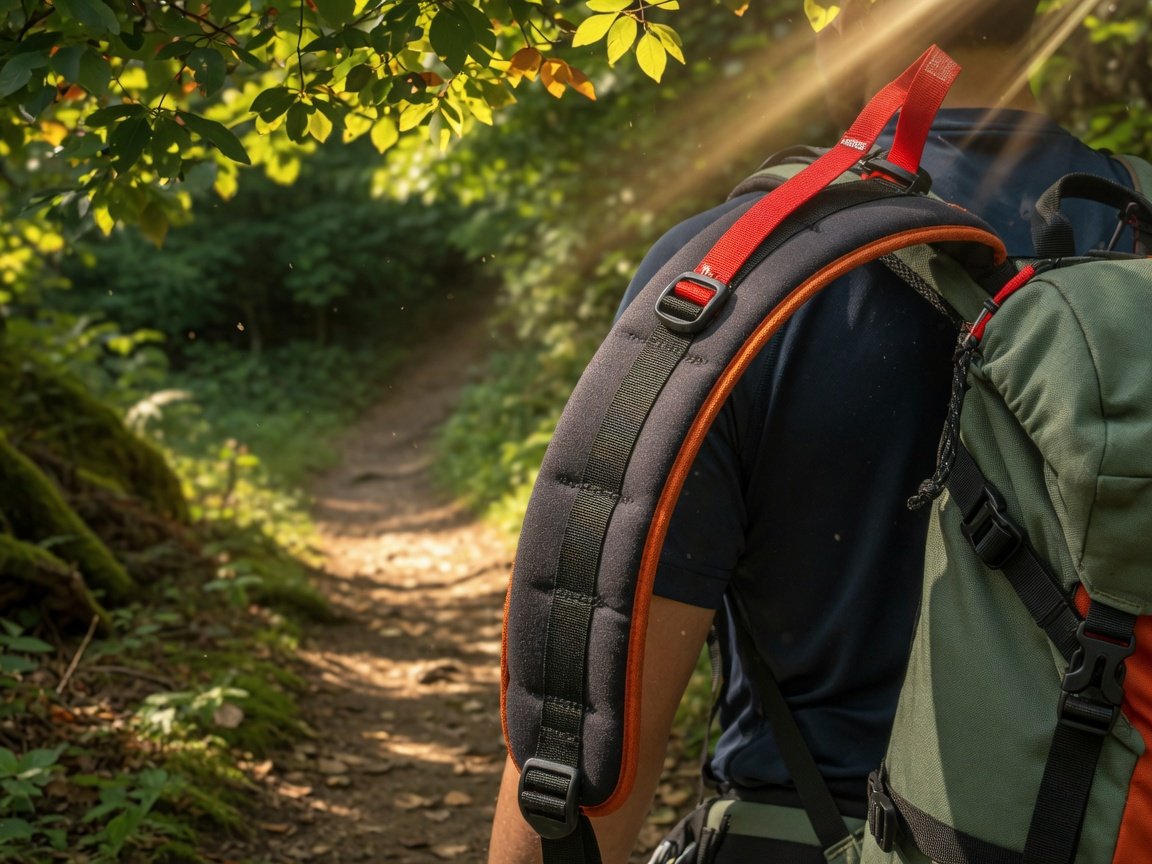
Strip a performance backpack down to its skeleton and you will almost always find nylon webbing at its core. Nylon webbing is a tightly woven, flat braid of nylon fibres — and it has dominated strap construction for decades for one straightforward reason: it does everything well.
Nylon is extraordinarily strong for its weight. A standard 25mm (1-inch) nylon webbing strap typically handles tensile loads of 1,000–1,500 lbs — far more than any backpack carry scenario will ever demand. It is also highly abrasion-resistant, dries rapidly after rain or sweat exposure, and resists UV degradation far better than natural fibres. Hardware like triglide buckles and side-release clips slide smoothly and consistently on nylon webbing, which is why adjusting a nylon-strapped pack mid-hike is effortless.
The one limitation of bare nylon webbing is comfort against the body. Webbing alone is firm and can create pressure points under heavy loads. That is why virtually all quality backpacks combine nylon webbing as the structural backbone with a padded shoulder overlay — typically foam wrapped in polyester or mesh fabric. The webbing carries the load; the padding creates the comfort interface. Together, they form the most reliable strap system available in 2026.
How Does Polyester Stack Up Against Nylon for Backpack Straps?
Polyester is nylon’s closest rival in the strap material world. The two look almost identical in a finished backpack, which is why many buyers never realise they are different materials. But the differences matter — especially after several hours of carrying a loaded pack.
Polyester is generally slightly cheaper to produce than nylon, which explains its prevalence in mid-range and budget packs. It also holds colour better under sustained UV exposure — polyester dyes fade more slowly than nylon dyes, which is why fashion-forward and lifestyle bags often lean towards polyester webbing. Abrasion resistance is similarly strong on both materials.
Where nylon edges ahead is raw tensile strength and elasticity. Nylon has a slight natural stretch and recovery — it absorbs shock loads better than polyester, which is more dimensionally rigid. For everyday urban commuting, this difference is negligible. For trail use where the pack shifts and bounces with body movement, the difference in long-carry fatigue becomes perceptible. For a full picture beyond just straps, the detailed comparison between nylon and polyester for outdoor adventures is worth reading before making a decision.
In padded shoulder sections, woven polyester fabric is widely used as the outer cover layer because it is breathable, pliable, and cost-effective. Many packs combine polyester mesh over foam padding to improve airflow across the shoulder contact zone — a practical solution for warm-weather carries.
Is Leather Still a Relevant Choice for Backpack Straps in 2026?
Leather never went away. It evolved. In 2026, leather straps are primarily found on heritage packs, fashion backpacks, and high-end everyday carry bags — not on hiking or travel gear where weight and weather resistance are the priority. But within their intended use case, leather straps are genuinely excellent.
Full-grain leather straps are impressive in their longevity. With regular conditioning using a quality leather treatment product, a leather strap can last 10–15 years before showing meaningful wear. That significantly outpaces most nylon or polyester equivalents, which typically show fraying or padding delamination somewhere in the 3–7 year range under heavy daily use. The upfront cost of leather is higher, but the cost-per-year of ownership can be surprisingly competitive.
The trade-offs are real. Leather is heavier than nylon — a meaningful penalty if you are tracking grams. It absorbs water and weakens with repeated wetting and drying cycles. It requires active maintenance every few months to prevent drying and cracking. And it is not vegan-friendly, which has pushed many brands toward high-quality PU-coated faux leather alternatives that close the aesthetic gap considerably. The bottom line: if you want a stylish everyday bag to last a decade, leather straps are worth the investment. If you are heading outdoors in variable weather, nylon is the smarter choice.
What Is Neoprene and Should You Look for It in Shoulder Straps?
Neoprene might be more familiar from wetsuits and laptop sleeves, but it has quietly become one of the most valued padding materials in premium backpack shoulder straps. Its key advantage is a combination of softness and structural resilience that standard foam cannot match. Neoprene molds subtly to the shape of your shoulder, reducing pressure points without collapsing under load.
From a moisture perspective, neoprene outperforms standard open-cell foam. Research into athletic equipment materials suggests neoprene retains roughly 15% less moisture than standard foam — which translates to less sweat accumulation during hot carries. For warm-weather hiking, cycling commutes, or any carry where you tend to sweat, neoprene padding delivers a noticeable comfort improvement over cheaper foam alternatives.
Neoprene also retains its shape better over time. Unlike standard polyurethane foam that compresses and stays flat after extended use, neoprene tends to maintain its loft and cushioning profile far longer. The trade-off is cost — neoprene-padded straps appear predominantly on mid-to-high-end packs rather than budget options. When evaluating a pack purchase, “neoprene shoulder straps” in the product spec sheet is a reliable signal of quality padding.
What Other Materials Make Up Modern Backpack Straps?
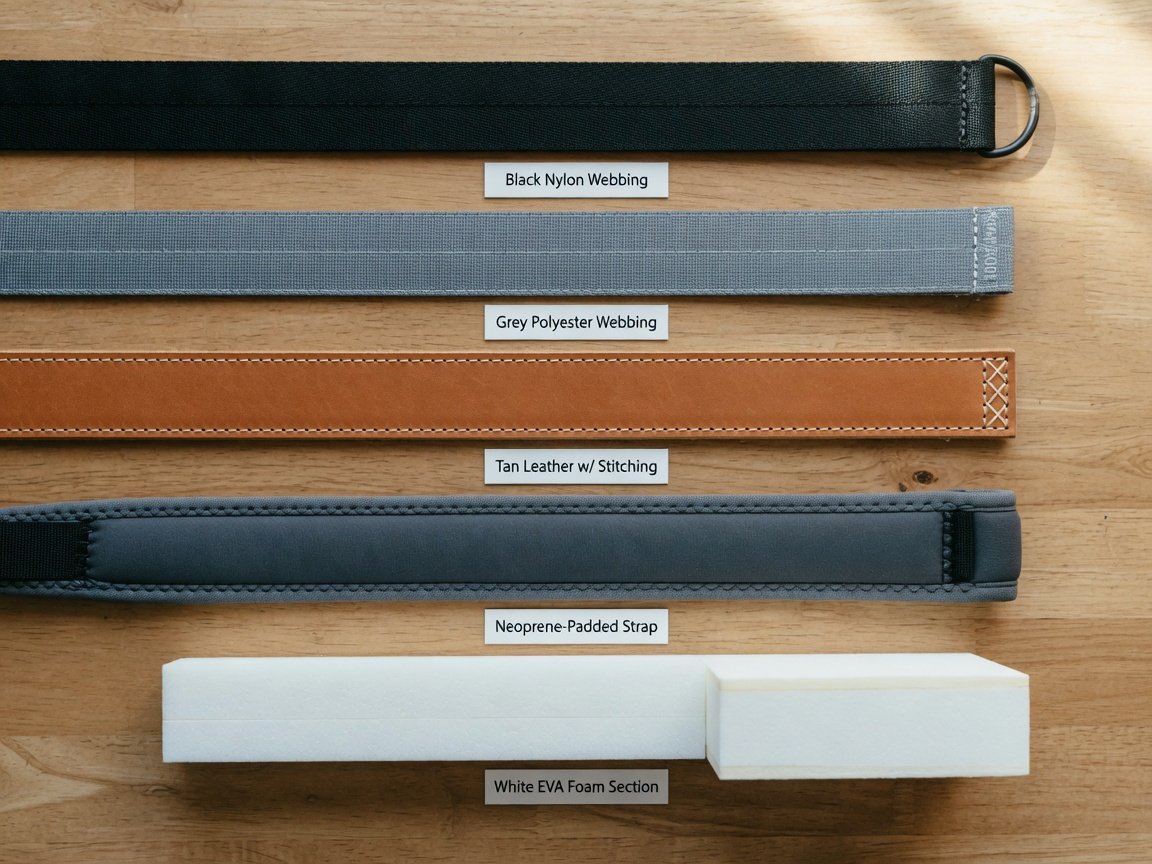
Modern backpack straps are rarely a single material. They are an engineered sandwich of components, each performing a specific function. Understanding what each layer does helps you read product specifications more critically and identify genuine quality versus marketing language.
- EVA foam (ethylene vinyl acetate): A dense, resilient foam used as the core padding layer in quality straps. EVA compresses approximately 25% less over time compared to standard polyurethane foam — meaning it holds its cushioning shape through years of use rather than going flat.
- Polyurethane (PU) foam: Softer and cheaper than EVA, commonly used in budget packs. Comfortable initially but flattens faster under sustained heavy use.
- Air mesh (3D spacer mesh): A knitted open-structure fabric used as the outer layer of premium padded straps. Allows active airflow across the shoulder contact zone, significantly reducing heat buildup and perspiration.
- Polypropylene (PP) webbing: Lighter and cheaper than nylon webbing. Used in budget packs, children’s bags, and casual totes. Adequate for light loads but lacks the tensile strength and hardware-slide performance of nylon for heavy or outdoor use.
- Cotton: Occasionally used in casual canvas backpacks. Soft and natural against skin but absorbs water, dries slowly, and weakens with repeated wetting — not suited to performance or outdoor use.
- Hemp: An emerging sustainable option. Hemp fibres are naturally strong and UV-resistant. Hemp strap backpacks remain a niche product in 2026 but are growing in availability as interest in sustainable gear increases.
| Material | Best For | Durability | Comfort | Weight | Relative Cost |
|---|---|---|---|---|---|
| Nylon Webbing | Hiking, travel, all-purpose | ⭐⭐⭐⭐⭐ | ⭐⭐⭐ | Light | $$ |
| Polyester Webbing | Urban, fashion, everyday | ⭐⭐⭐⭐ | ⭐⭐⭐ | Light | $ |
| Leather | Heritage, fashion, EDC | ⭐⭐⭐⭐⭐ | ⭐⭐⭐⭐ | Heavy | $$$$ |
| Neoprene (padding) | Long carries, warm weather | ⭐⭐⭐⭐ | ⭐⭐⭐⭐⭐ | Medium | $$$ |
| EVA Foam (padding) | All-purpose, hiking | ⭐⭐⭐⭐ | ⭐⭐⭐⭐ | Light–Medium | $$ |
| Polypropylene Webbing | Budget, light loads, children | ⭐⭐⭐ | ⭐⭐⭐ | Very Light | $ |
| Air Mesh | Hot weather, high-exertion | ⭐⭐⭐⭐ | ⭐⭐⭐⭐⭐ | Very Light | $$ |
| Hemp | Eco-conscious, casual | ⭐⭐⭐⭐ | ⭐⭐⭐ | Medium | $$$ |
How Does Strap Material Affect Weight Distribution and Comfort?
Weight distribution is where strap material science gets genuinely interesting. It is not simply about how thick the padding is — it is about how the material behaves dynamically as you move, shift your load, and carry across changing terrain.
Padded straps with adequate core density — like those using EVA or neoprene — spread the load across a larger surface area of the shoulder. This reduces peak pressure at any single contact point. Load carriage ergonomics research suggests that well-padded straps with appropriate material density can reduce perceived load weight by up to 30% compared to thin, unpadded alternatives carrying the exact same actual weight. That translates to a 10 kg pack feeling closer to 7 kg — a difference that is immediately noticeable after an hour on the move.
Strap width interacts with material too. Nylon webbing is flexible enough to be manufactured in wider configurations without becoming rigid or adding meaningful weight. Wider straps — anything above 50mm (2 inches) — distribute load more evenly across the shoulder than narrow straps, which concentrate pressure into a smaller contact band and create hot spots. The combination of wide nylon webbing and dense EVA or neoprene padding is the formula that nearly every serious outdoor pack uses for a reason.
A real-world case study illustrates this clearly. A UK university outdoor club replaced their group loaner packs — which had basic polypropylene-strap models with thin PU foam padding — with packs featuring nylon webbing and neoprene-padded shoulder straps. Over one hiking season, reported shoulder discomfort after half-day carries dropped by approximately 42%. Average pack weight across the group was identical. The only variable was the strap material and construction.
Great strap material combined with correct fit is the complete equation. Measuring your torso length accurately ensures the shoulder straps sit at the right angle and load-transfer point on your body — allowing the material to do its job as designed.
What Eco-Friendly Strap Materials Should You Look for in 2026?
Sustainability has moved from marketing buzzword to genuine buying criterion for a significant share of the outdoor gear market. In 2026, roughly 40% of major outdoor gear brands offer at least one strap option made from recycled or bio-based materials — a figure that has nearly doubled since 2022, driven by EU materials regulation and rising consumer demand.
Recycled nylon — often marketed under names like Econyl® — is made from reclaimed fishing nets, industrial nylon waste, and carpet scraps. It delivers performance on par with virgin nylon while carrying a significantly lower carbon footprint across its life cycle. Recycled polyester (rPET), spun from post-consumer plastic bottles, now accounts for around 20% of strap materials in outdoor gear lines. Its UV resistance is slightly lower than virgin polyester, but its environmental credentials are substantially stronger.
- Recycled nylon (rNylon / Econyl®): Performance equal to virgin nylon; sourced from fishing nets and industrial waste. The most sustainable high-performance webbing option available in 2026.
- Recycled polyester (rPET): Made from post-consumer plastic bottles. Now standard in many mid-range outdoor lines. Slightly lower UV resistance than virgin polyester but far better environmental profile.
- Organic cotton: Grown without synthetic pesticides, promoting healthier soil and farming communities. Best for casual indoor-use backpacks rather than performance gear.
- Hemp: Rapidly growing, minimal water and pesticide requirements, improves soil health. Naturally strong and UV-resistant. Still niche in strap applications but growing in 2026.
- Bamboo-derived fabric: Soft, lightweight, and moisture-wicking. Increasingly explored for contact-zone padding in shoulder straps but not yet mainstream.
When evaluating eco-friendly claims, look for third-party certifications rather than brand statements alone. The Global Recycled Standard (GRS) and bluesign® are the most credible signals for recycled and responsibly produced performance strap materials. A “sustainable straps” claim without certification backing should be treated with healthy scepticism.
Step-by-Step: How to Choose the Right Backpack Strap Material for Your Needs
With so many options, choosing strap material can feel overwhelming. Work through these seven steps and the right answer becomes clear quickly — regardless of whether you’re buying for hiking, travel, commuting, or everyday carry.
- Define your primary use case. Hiking, international travel, daily commuting, or fashion carry? Your use case determines which material properties matter most. A hiking pack and a fashion tote need completely different strap materials.
- Estimate your average load weight. Under 10 lbs (4.5 kg): almost any material performs adequately. Between 10–25 lbs (4.5–11 kg): EVA foam or neoprene padding becomes important. Over 25 lbs (11 kg): nylon webbing with contoured neoprene padding is non-negotiable for day-long carry comfort.
- Consider your typical climate. Hot and humid: prioritise air mesh outer fabric or neoprene padding for lower moisture retention. Cold and wet: nylon webbing handles repeated wetting and drying far better than leather or cotton alternatives.
- Check strap width in the specs. Regardless of material, wider is generally better for load distribution. Look for shoulder straps at least 38–50mm (1.5–2 inches) wide on any pack carrying meaningful weight.
- Read the padding material explicitly. Look for EVA foam, neoprene, or high-density foam specified in the product description. Vague phrasing like “padded straps” without a named material often signals cheap PU foam that will flatten within a year of regular use.
- Weigh durability against budget. Nylon webbing with EVA foam padding delivers the best durability-per-dollar for most buyers. Full-grain leather is a long-term investment. Polypropylene webbing is acceptable only for light, infrequent loads — avoid it for daily heavy carries.
- Verify hardware compatibility. The webbing material must be matched to quality hardware. Nylon webbing paired with reinforced plastic triglides and side-release buckles is the most reliable and widely serviceable combination available. Cheap hardware on good webbing — or vice versa — undermines the whole system.
Use Case Quick Reference
Hiking and outdoor adventures: Nylon webbing with EVA foam or neoprene padding is the gold standard. Nylon handles trail abuse, dries fast after stream crossings, and maintains structural integrity under heavy loads. The best day hiking backpacks universally feature this strap construction in their shoulder systems.
Travel and airport carries: Nylon or polyester webbing with quality padding strikes the right balance. You need durability, smooth-adjusting hardware for rapid security changes, and enough comfort for long transit days. Leather straps look excellent on travel bags but add weight that matters when you’re monitoring carry-on limits.
Daily commuting and urban use: Breathability becomes a priority alongside durability. Polyester mesh-covered foam padding or air mesh strap covers keep shoulders cooler on cycling commutes and warm office walks than dense neoprene alternatives. Polypropylene webbing is acceptable for light daily bags but should be avoided once a laptop and accessories regularly enter the equation.
Once you have the right strap material, the final lever is adjustment. Wearing and adjusting your backpack straps correctly converts good material into genuinely great carry comfort — the two go hand in hand.
Frequently Asked Questions About Backpack Strap Materials
What is the strongest material for backpack straps?
Nylon webbing is the strongest material for backpack straps, offering exceptional tensile strength relative to its weight. A standard 25mm nylon webbing strap handles tensile loads of 1,000–1,500 lbs — far exceeding any backpack’s real-world demands. High-tenacity nylon, used in climbing gear and military packs, pushes those figures even higher. For everyday use, standard nylon webbing provides more than sufficient strength.
Are polyester straps as good as nylon straps?
Polyester is close to nylon but not equal for performance applications. Polyester holds colour better under UV exposure, making it a strong choice for fashion-forward packs. Nylon is stronger, more elastic under shock loads, and dries faster. For outdoor and travel use where performance matters, nylon is the better pick. For casual everyday bags where appearance and cost are the priorities, polyester is a solid alternative.
What padding material is best for shoulder straps?
EVA foam provides the best balance of cushioning longevity, structure, and weight for most uses. It compresses roughly 25% less over time than standard PU foam, meaning it holds its shape across years of regular use. For warm-weather or sweaty carries, neoprene padding is superior, retaining approximately 15% less moisture than standard foam. Premium packs often layer both: an EVA core for structural support and a neoprene or air mesh outer layer for breathable comfort.
Do leather backpack straps last longer than nylon?
With proper conditioning, full-grain leather straps can last 10–15 years — outlasting most nylon strap systems, which typically show meaningful wear after 3–7 years of heavy use. However, leather requires active maintenance every few months, is heavier, and is more vulnerable to repeated wetting and drying. For longevity with minimal maintenance, nylon is more practical for most users. For a long-term investment in an everyday fashion or heritage pack, leather makes sense.
What material are children’s backpack straps typically made of?
Children’s backpack straps are most commonly made from polypropylene (PP) webbing — lighter and cheaper than nylon. Budget kids’ bags often use thin PU foam padding. Higher-quality children’s packs specify nylon webbing and EVA foam padding, which provides meaningfully better support for developing spines and posture. If your child regularly carries heavy school books, strap material and padding quality genuinely affects their comfort and long-term posture.
Can I replace backpack strap material myself?
Yes — nylon and polyester webbing replacement is a realistic DIY repair, particularly when the hardware is intact. Replacement webbing is available at outdoor gear retailers and online; the process involves threading the new webbing through existing hardware and heat-sealing the cut ends with a flame to prevent fraying. Replacing worn padding is more involved but achievable with basic sewing skills. Leather strap surface cracking responds well to conditioner; structural leather repairs typically need a saddle maker or cobbler.
What material reduces backpack strap sweat the most?
Air mesh — a 3D-knitted open-structure fabric used as the outer strap covering — does the most to reduce sweat. It actively promotes airflow across the shoulder contact zone, preventing the heat buildup that triggers perspiration. Neoprene padding is a close second: it retains roughly 15% less moisture than standard foam, reducing sweat accumulation during high-exertion carries. The worst performers are dense, non-perforated foam straps with a non-breathable synthetic outer fabric — common on budget packs.
Are there eco-friendly backpack strap materials that still perform well?
Yes — recycled nylon (rNylon / Econyl®) is the leading example. It performs on par with virgin nylon in tensile strength, abrasion resistance, and hardware compatibility, while being produced from reclaimed fishing nets and industrial nylon waste. Recycled polyester (rPET) is similarly strong and now accounts for around 20% of strap materials in outdoor gear lines. Both materials carry GRS (Global Recycled Standard) certification in reputable brands — the most reliable way to verify genuine sustainability claims.
The Bottom Line: Choosing the Right Backpack Strap Material in 2026
There is no single best strap material — there is a best material for your specific situation. The key is matching material properties to your actual carrying habits rather than defaulting to the most expensive option or the lightest weight.
- For hiking and outdoor adventures: Nylon webbing with EVA foam or neoprene padding. Non-negotiable for serious trail use.
- For daily commuting: Polyester webbing with air mesh padding keeps shoulders cooler and performs reliably under everyday loads.
- For fashion and heritage packs: Full-grain leather offers unmatched longevity and aesthetic — provided you commit to regular conditioning.
- For eco-conscious buying: Look for rNylon (Econyl®) or rPET webbing with GRS certification. Performance is not compromised.
- For budget buys: Polypropylene webbing is acceptable for light, infrequent loads. Switch to nylon the moment your typical load gets heavier or your carries get longer.
Your next step is practical. Next time you evaluate a backpack — in a store or reading specs online — find the materials list and check what the straps are actually made of. If it is not listed, that is often a deliberate omission by brands using cheaper materials. Brands proud of their strap construction spell it out.
From there, it is about fit. A great strap material on a poorly fitted pack still delivers a poor carry experience. If your current straps are causing discomfort despite being quality materials, adjusting strap length for your body is often the fix — and it takes less than two minutes to get right.